
The best moving supplies for apartments are a focused kit that protects fragile items, speeds up loading, and keeps walkways clear. A smart list includes right-size boxes, cushioning, strong tape, furniture protection, labels, and a hand truck. Choose stackable, lift-safe gear to reduce damage and make move-in day faster.
By Ajinkya O — Let’s Start Moving
Last updated: 2026-06-26
At a Glance
For apartment moves, prioritize sturdy medium boxes, a tape gun with quality tape, furniture pads, stretch wrap, mattress bags, and a two-wheel dolly. These essentials cut packing time by hours, prevent scuffs in tight hallways and elevators, and keep boxes stackable so you can load safely without blocking shared spaces.
- Core kit: medium double-wall boxes, wardrobe boxes, heavy-duty tape + dispenser, bubble wrap + packing paper, stretch wrap, furniture blankets, mattress bag, hand truck (dolly), bold markers/labels.
- Why it matters: protects surfaces, speeds carry distance, and prevents mid-move repacking. Fewer trips, fewer broken items.
- Apartment realities: elevators, stairs, narrow doors, and shared corridors demand compact, stackable, and secure packaging.
- Pro tip: build an “open-first” bin with daily essentials and a small toolkit so your first night is stress-free.
Quick Comparison Table
Use this quick table to match each supply to its job during an apartment move. Focus on stackability, surface protection, and stair/elevator efficiency. If you buy only a few items, get medium boxes, a tape gun, stretch wrap, and a hand truck—those four deliver the biggest time and damage savings.
| Supply | Best For | Key Spec | Why It Matters in Apartments |
|---|---|---|---|
| Medium double-wall boxes | Books, kitchenware, décor | ECT 44+ / ~2.0 cu ft | Optimized weight for stairs; stacks evenly in elevators and small trucks |
| Wardrobe boxes | Hanging clothes | 24–36 in. bar width | Moves closets in minutes; reduces wrinkling and re-pressing time |
| Heavy-duty tape + dispenser | Sealing boxes fast | 2.0–2.5 mil thickness | H-taping keeps bottoms from blowing out on stairs |
| Bubble wrap + packing paper | Glass, plates, frames | Small/medium bubble; ink-free paper | Absorbs bumps in tight hallways and elevator thresholds |
| Stretch wrap | Securing drawers, bundles | 60–80 gauge | Prevents swinging parts from scraping walls and doors |
| Furniture blankets | Sofas, tables, dressers | 72×80 in., quilted | Stops scuffs on corners while pivoting through doorways |
| Mattress bag | Mattress/box spring | Queen/King sizes | Shields from dust and elevator grime during moves |
| Two-wheel hand truck | Stacks of boxes | 300–600 lb rating | Fewer trips; safer maneuvering across long corridors |
| Labels + bold markers | Room-by-room sorting | Smudge-resistant ink | Speeds elevator loading and final room drops |
| Reusable plastic bins | Electronics, cables | Nest/stack design | Moisture-resistant; great for rain/snow days |
Our Top Pick
If you buy one thing, choose medium double-wall moving boxes around 2.0 cubic feet. They pack dense items without exceeding a safe carry weight, stack squarely in elevators, and resist crushing on dolly runs. Strong boxes prevent blown-out bottoms—the top cause of broken dishes in apartment moves.
Why this wins: Medium double-wall boxes balance capacity and handleability better than any other supply. Overfilled large boxes are risky on stairs, and small boxes multiply trips. Mediums hit the sweet spot: secure, stackable, and versatile.
- Specs to look for: Edge Crush Test (ECT) 44+ or double-wall construction; printed handholds help on stairwells.
- Use case: Kitchen packing, books and media, bathroom/toiletry kits, and décor. One person can lift safely, two can stack quickly.
- Pro move: Pack heavy-to-light with crushed paper on the bottom, bubble on fragile layers, and a final paper cap for stability.
In our experience managing apartment moves end-to-end, durable boxes are the backbone of a smooth day. Our packing services and supplies workflows standardize on medium boxes for most rooms, which keeps loads predictable for dollies and elevator cycles. That predictability cuts hallway congestion and reduces handling errors.
Top 12 Apartment Moving Supplies (The Rest of Our List)
Round out your kit with protective wraps, furniture pads, and handling tools. Each item below fixes a specific apartment constraint: elevators, stairs, tight turns, and shared hallways. Combine them and you’ll reduce trips, protect surfaces, and keep your movers or friends working in a safe, steady rhythm.
2) Wardrobe Boxes with Metal Hanging Bars
Wardrobe boxes move an entire closet in minutes. Clothes stay on hangers, wrinkle-free, so there’s no re-pressing on day one. For most renters, two tall wardrobes replace a dozen small bags and eliminate cluttered hallways.
- Capacity tip: A standard 24–36 inch bar holds roughly 20–30 garments. Load heavier coats at the bottom.
- Safety: Tape the bar slots for extra security; lay a towel on the box floor to catch loose shoes.
- Apartment fit: Tall yet slim, they wheel onto dollies and fit into elevators without tilting.
We’ve found wardrobe boxes also double as last-minute linen carriers. Drop sealed bags of bedding under the hanging items, then tape the lid tight and H-tape the bottom for added strength.
3) Heavy-Duty Packing Tape + Ergonomic Dispenser
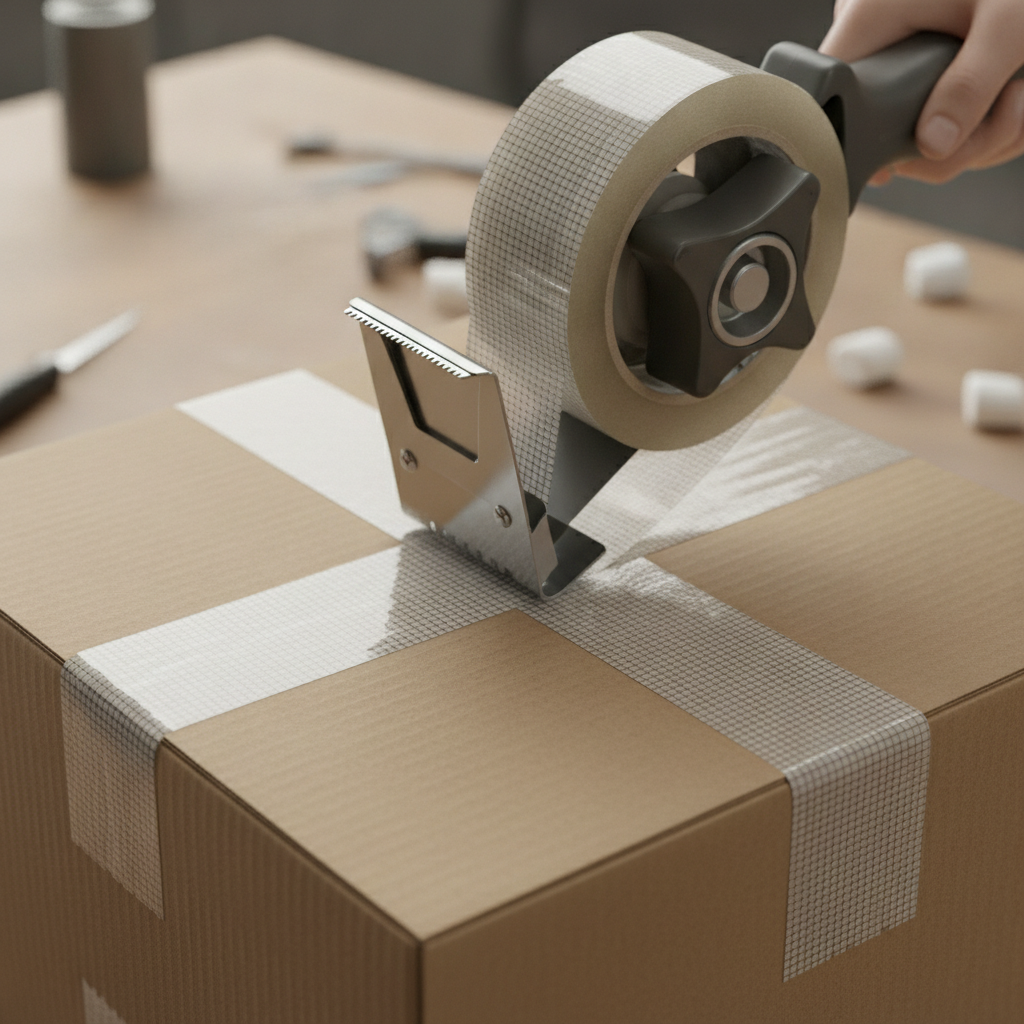
A tape gun with quality acrylic or hot-melt tape speeds sealing and prevents box blowouts. The H-tape method—one strip along the seam and one across each edge—raises bottom strength significantly and resists humidity.
- Specs: Look for 2.0–2.5 mil thickness and a serrated blade on the dispenser for clean cuts.
- Output: One roll often seals 25–30 medium boxes with H-taping. Keep a spare within reach.
- Noise: Quiet-release tape is great for early-morning moves in shared buildings.
We standardize on tape guns because they keep one hand free to square corners. That seemingly small detail matters when you’re sealing in tight entryways.
4) Bubble Wrap and Ink-Free Packing Paper
Pair small-bubble wrap for glassware with ink-free paper for dishes and frames. Paper provides friction and layering; bubble absorbs shocks from elevator thresholds and stair pivots.
- Layering rule: Heaviest items on bottom, bubble in the middle, paper cap on top. Plates on edge, not flat.
- Right-fit: Use small bubbles (3/16 inch) for glass; medium (5/16 inch) for frames and electronics.
- Waste control: Pre-cut sheets speed packing and reduce loose scraps in hallways.
In cramped kitchens, we stage a clean bin with sheets pre-torn to reduce packing time. That keeps counters clear for labeling and stacking.
5) Stretch Wrap (60–80 Gauge)
Stretch wrap binds drawers, cabinets, and bundled items without sticky residue. It’s fast, silent, and critical for preventing swinging doors and hardware from scratching walls during tight turns.
- Gauge guide: 60–80 gauge works for most apartment furniture and bundles.
- Method: Wrap in figure-eights around handles and corners, finishing with a snug spiral.
- Bonus: Wrap blankets onto furniture so pads never slip during stair carries.
We’ve saved countless wall scuffs simply by wrapping dresser drawers shut instead of taping them. No residue, and less time un-wrapping at the new place.
6) Furniture Blankets (Quilted Pads)
Thick, quilted pads protect sofas, tables, and dressers from nicks in doorways and elevators. They also help you slide pieces carefully over thresholds without scratching floors.
- Size: 72×80 inches covers most sofas and large tables; use two for oversized couches.
- Stack trick: Pad corners first, then secure with stretch wrap for a tight, scuff-proof jacket.
- Elevator etiquette: A padded sofa won’t snag other people’s clothing in shared lifts.
We routinely pad-wrap before moving anything out the door. It’s faster to protect once than to repair damage later.
7) Mattress Bag (Heavy Plastic, Vent Holes)
Mattress bags keep fabrics clean and dry. They guard against dust on loading docks and the grime that can transfer from elevator walls during an all-day move.
- Fit: Buy the exact mattress size; cinch with tape at the open end after sliding the mattress in.
- Carry: Use nylon straps or a shoulder harness for safer stairwell carries.
- Storage: If you’re staging items for a day, bagged mattresses stack cleanly against a wall.
We also bag box springs—fabric tears are common on unprotected seams when pivoting through doorways.
8) Two-Wheel Hand Truck (Dolly)
A dolly compresses five box trips into one. For long apartment corridors, that’s a massive time saver and a back-saver. It also stabilizes tall stacks in elevators so loads don’t sway.
- Rating: 300–600 lb capacity covers most residential needs; pneumatic tires help with thresholds.
- Stack order: Heaviest boxes low, lightest high. Strap stacks taller than chest height.
- Hallway flow: Stage dollies near elevators; move in cycles to avoid blocking neighbors.
We often pair a dolly with a spotter to manage elevator doors. That keeps fingers safe and loads steady.
9) Bold Labels and Smudge-Resistant Markers
Clear, consistent labeling speeds everything: elevator loading, stacking, and room drops on the other end. It also reduces mid-move box opening when someone needs “just one thing.”
- System: Room name + contents + priority number (1 = open first).
- Placement: Two adjacent sides and the top for quick reads, even when stacked.
- Color-coding: Assign colors per room for fast sorting on the truck and at delivery.
We bring pre-printed stickers for kitchens and bathrooms. Those get opened first, so they deserve the clearest labels.
10) Reusable Plastic Bins (Nestable, Stackable)
Plastic totes protect electronics, cables, and items that don’t love moisture. They’re great on rainy or snowy move days and stack neatly in elevator trips.
- Design: Latching lids, nestable when empty, stackable when full.
- Use: Pack small appliances, smart-home hubs, routers, and cable bags.
- Eco-win: Reuse them for closet or garage storage after the move.
We often stage a “tech tote” with modem, router, remotes, power strips, and HDMI cables so entertainment comes online quickly at the new place.
11) Zip-Top Bags and Cable Ties
Small bags keep hardware sets together—screws, brackets, shelf pins, and furniture feet. Cable ties bundle cords so they don’t snag during carries or disappear into boxes.
- Labeling: Write the furniture piece on the bag; tape it to the item or drop it in a clearly labeled bin.
- Bundle rule: Coil cables loosely and secure with a tie to avoid kinks.
- Elevator-ready: Nothing loose to catch in doors or on neighbors’ belongings.
We’ve avoided too many lost-screw hunts to count by bagging and labeling hardware the moment furniture is disassembled.
12) Basic Toolkit and Safety Gear
A compact toolkit—Phillips and flathead screwdrivers, Allen keys, adjustable wrench, utility knife, and a tape measure—solves 90% of disassembly and reassembly needs. Add gloves with grip and a simple headlamp for dim storage rooms.
- Knife rule: Retract blades between cuts; never cut toward yourself.
- Measure twice: Confirm furniture fits before committing to a hallway run.
- Gloves: Grip gloves reduce drops and protect knuckles on brick or concrete walls.
We keep duplicates of common bits because one always goes missing when you need it most. A spare Allen key is worth its weight in gold on a bedframe.
How to Choose Apartment-Friendly Supplies
Choose supplies that balance strength, weight, and maneuverability. Medium boxes, high-adhesion tape, and padded protection reduce strain while protecting surfaces. Look for stackable designs, crush resistance (ECT ratings), and tools that cut hallway trips. If it saves steps and prevents scuffs, it belongs in your kit.
- Right-size boxes: Aim for 60–70% medium boxes. Large boxes for pillows/linens only; overfilling invites breaks on stairs.
- Strength ratings: Seek ECT 32 for light items and ECT 44+ or double-wall for dense loads; it resists elevator compression.
- Tape quality: 2.0–2.5 mil thickness with strong adhesion supports H-taping and humidity changes.
- Protection layers: Bubble + paper = impact + friction. Wrap corners; pad anything taller than a countertop.
- Handling tools: A 300–600 lb dolly multiplies your output; add straps for tall stacks.
- Labeling clarity: Room + contents + priority cuts unloading time dramatically.
Here’s the thing: apartment moves are often decided in the last 50 feet—tight turns, elevator thresholds, and shared corridors. Supplies that improve those last steps pay off most.

Buying Guide: Quantities and Quick Formulas
Plan quantities by room count and item density. A typical one-bedroom uses 20–30 medium boxes, 3–5 wardrobe boxes, 2–3 rolls of tape, and 2–3 furniture pads per large piece. Estimating up front prevents mid-move supply runs that slow elevator cycles and increase hallway clutter.
- Boxes: Studio: 15–20 mediums; 1BR: 20–30; 2BR: 35–45. Add 3–5 larges for linens and pillows.
- Tape: 1 roll per 25–30 boxes with H-taping; keep a spare for last-day sealing.
- Wraps: One 100-ft small-bubble roll per kitchen; one medium-bubble roll for frames/electronics.
- Blankets: 2 per sofa; 1 per dresser/nightstand; 3–4 for dining table + chairs.
- Mattress bags: 1 per mattress/box spring; label sizes clearly.
- Dolly: One two-wheel dolly per team; add a second for long corridors.
Pack an “open-first” tote with a change of clothes, toiletries, basic cookware, chargers, router, remote, and tools. That single bin saves an hour of box hunting on move-in night.
Tools and Resources You Can Use Today
Use a printable checklist, a room-by-room packing plan, and a move-day workflow to stay on schedule. Templates save time and keep hallways clear. Scan these resources before you start so you know what to prep, pack, stage, and load—without scrambling for missing tape or boxes.
For a step-by-step packing outline, this practical packing checklist offers a simple room sequence that pairs well with the supplies above. If you’re building a custom plan, this stress-free move checklist explains how to stage items to reduce door jams. And for apartment-specific context, this brief apartment moving guide highlights coordination steps renters tend to overlook.
Need a hand? Our trained, licensed, and insured crews handle packing services and specialty items—from appliances to treadmills—using the exact supplies in this guide. We also offer a fast video-quote option so you can plan with confidence.
Mini Case Studies: Apartment Constraints Solved
Apartment moves succeed when supplies match building constraints. In our work handling residential and small-item moves, the right kit consistently reduces trips, protects surfaces, and prevents last‑minute repacking. These quick scenarios show how tailored supplies fix common bottlenecks in hallways and elevators.
Studio to One-Bedroom: Long Hallway, Small Elevator
Challenge: 120 feet from unit to elevator and a compact cab. Risk of hallway congestion and slow cycles.
- Kit used: Medium double-wall boxes, two-wheel dolly, stretch wrap for dresser drawers, and bold labels.
- Outcome: Five-box stacks per dolly reduced corridor traffic and avoided floor pileups; no drawer shifts.
- Takeaway: Medium boxes + dolly cadence wins over fewer, heavier large boxes.
Two-Bedroom: Tight Stairwell, No Elevator
Challenge: Multiple turns in a narrow stairwell with painted walls and a floating landing.
- Kit used: Furniture blankets wrap + stretch wrap, mattress bags, small-bubble for frames.
- Outcome: Zero wall marks; mattresses stayed clean; framed art arrived intact thanks to plate-on-edge packing.
- Takeaway: Pad corners liberally; wrap before the first turn to prevent scrapes.
One-Bedroom: High-Value Electronics
Challenge: Protect a gaming PC and sound equipment during a rainy-day move.
- Kit used: Reusable plastic totes with latching lids, medium-bubble wrap, desiccant packs, and labeled cable bags.
- Outcome: No moisture intrusion; cables reconnected in minutes using pre-bagged sets.
- Takeaway: Totes + cable discipline beat “mystery cord” boxes every time.
Our Methodology
We ranked supplies by apartment constraints: elevator size, stair runs, narrow doors, and shared corridors. Items scored highest if they reduced trips, protected surfaces, and kept loads stackable. We combined hands-on crew experience with checklists and packing principles proven across residential moves.
- Scoring pillars: protection, speed, maneuverability, stackability, and reuse value.
- Data inputs: Crew observations, standard packing rules (e.g., H-tape, plates on edge), and real hallway/elevator dimensions.
- User impact: We favored gear that a single person can operate without strain.
We continually refine this list based on feedback from apartment renters and our own team’s move logs. Patterns repeat: compact, strong, stackable wins—especially in shared spaces.
FAQ: Best Moving Supplies for Apartments
Apartment moves reward planning and compact, stackable supplies. These quick answers cover quantities, must-haves, and building constraints so you can avoid hallway pileups, elevator delays, and last-second repacks on moving day.
How many boxes do I need for a one-bedroom apartment?
Plan on 20–30 medium boxes plus a few large boxes for linens and pillows. Add 3–5 wardrobe boxes for hanging clothes. If you own many books or kitchen items, lean toward the higher end to avoid overfilling.
What size boxes are best for stairs and elevators?
Medium double-wall boxes around 2.0 cubic feet are safest. They keep weight manageable, stack cleanly on dollies, and resist crushing during elevator rides and tight hallway turns.
Do I need a hand truck for a small apartment move?
Yes, even a basic two-wheel dolly pays off fast. It compresses multiple trips into one, improves hallway flow, and keeps stacks stable in elevators. You’ll save time and reduce strain.
What’s the best way to protect furniture in tight hallways?
Pad corners with quilted blankets and secure them with stretch wrap. Wrap drawers and doors shut so hardware can’t swing and scratch walls. For mattresses, use fitted bags to avoid tears and grime.
Conclusion and Next Steps
The best moving supplies for apartments are compact, strong, and stackable: medium boxes, quality tape, protective wraps, and a two-wheel dolly. Build your kit around those, add labels and mattress protection, and you’ll move faster with fewer surprises—especially in narrow stairwells and shared hallways.
- Key takeaways: medium double-wall boxes win; H-taping prevents blowouts; pad corners before the first turn; label two sides plus the top.
- Action steps: estimate quantities, stage supplies by room, prep an “open-first” tote, and plan elevator cycles.
- Ready to simplify? Our licensed and insured crews can pack, protect specialty items, and manage move-day logistics so you start strong.