Best packing materials for moving house compared: local vs long-distance
Decision criteria: how we judge "best" packing materials
Not every moving material is best for every job. Use these objective criteria to compare options before you buy or ask a mover to supply them: protection level against drops and vibration, durability for the travel distance, weight and size that affect labour, effect on quoted volume and handling time, cost per unit, sustainability, and local availability in Ottawa. Movers and industry guides stress stronger materials for longer hauls because vibration and repeated handling increase failure risk, and they note that box choice changes labour and volume estimates that affect quotes (Packaging Materials for a Long-Distance Move, 5 Boxes You Need for a Home Move).
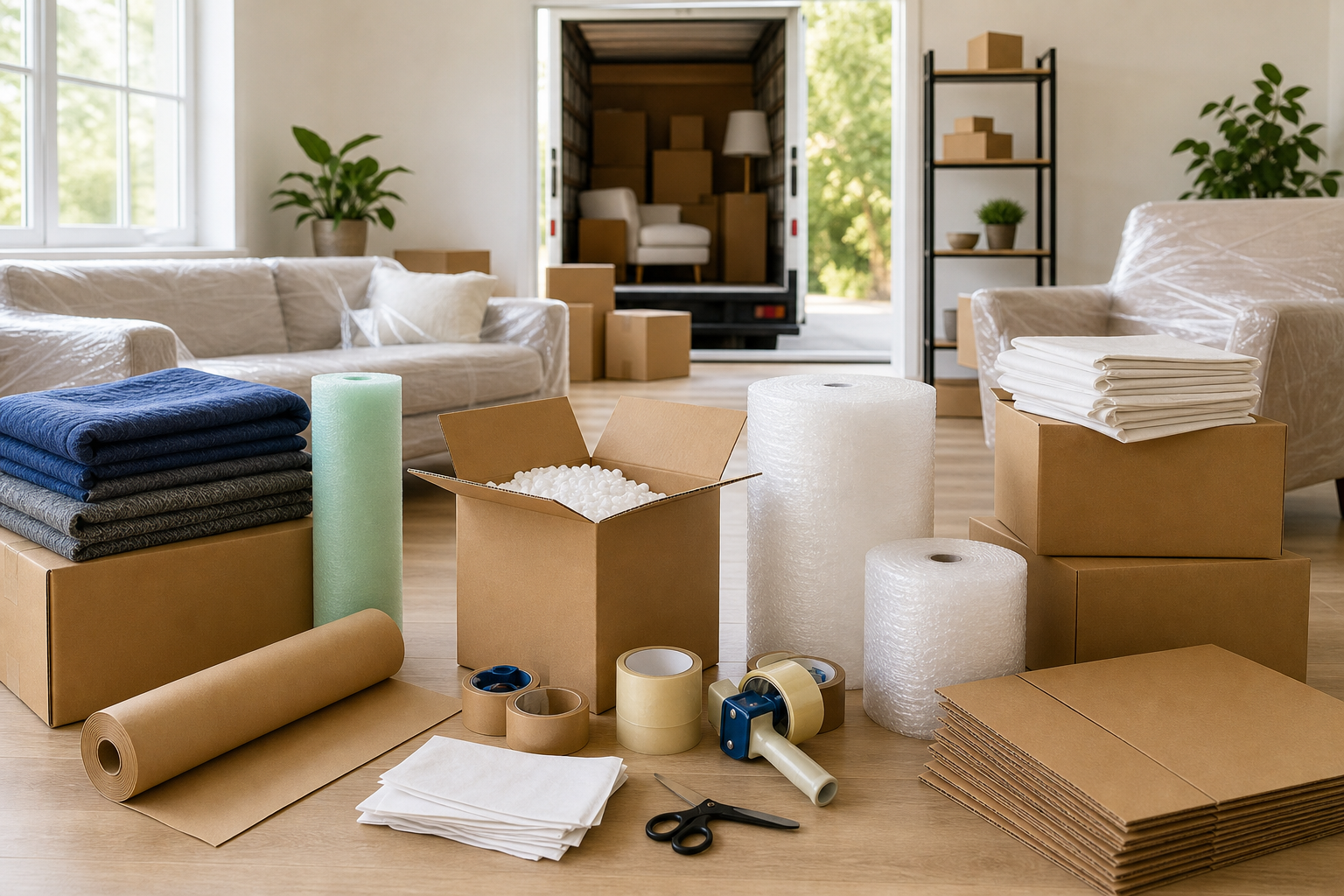
Essential packing materials every house move needs
Every house move, local or long-distance, should start with a baseline kit. These items reduce damage and keep handling time predictable for you and the movers. If you prefer a single point of contact for supplies and labour, consider professional packing services that bundle materials with expert packing.
- Box variety: small, medium and large boxes plus a few wardrobe and dish boxes for efficient packing and stacking.
- Packing paper: unprinted newsprint for cushioning and filling, preferred by packers for fragile items.
- Bubble wrap: use selectively for very fragile items and odd shapes where paper cannot protect edges.
- Furniture blankets and moving pads: protect large flat surfaces and upholstered pieces from abrasion and dirt.
- Quality packing tape and a tape dispenser: long-lasting seals reduce mid-transport failures.
- Stretch wrap: secures drawers, bundles loose parts, and keeps doors closed during handling.
- Markers, labels, and small tools: clear labelling speeds unloading and avoids repeat handling.
- Protective corners and mirror boxes: inexpensive protections for glass and framed art.
Best packing materials for short local moves
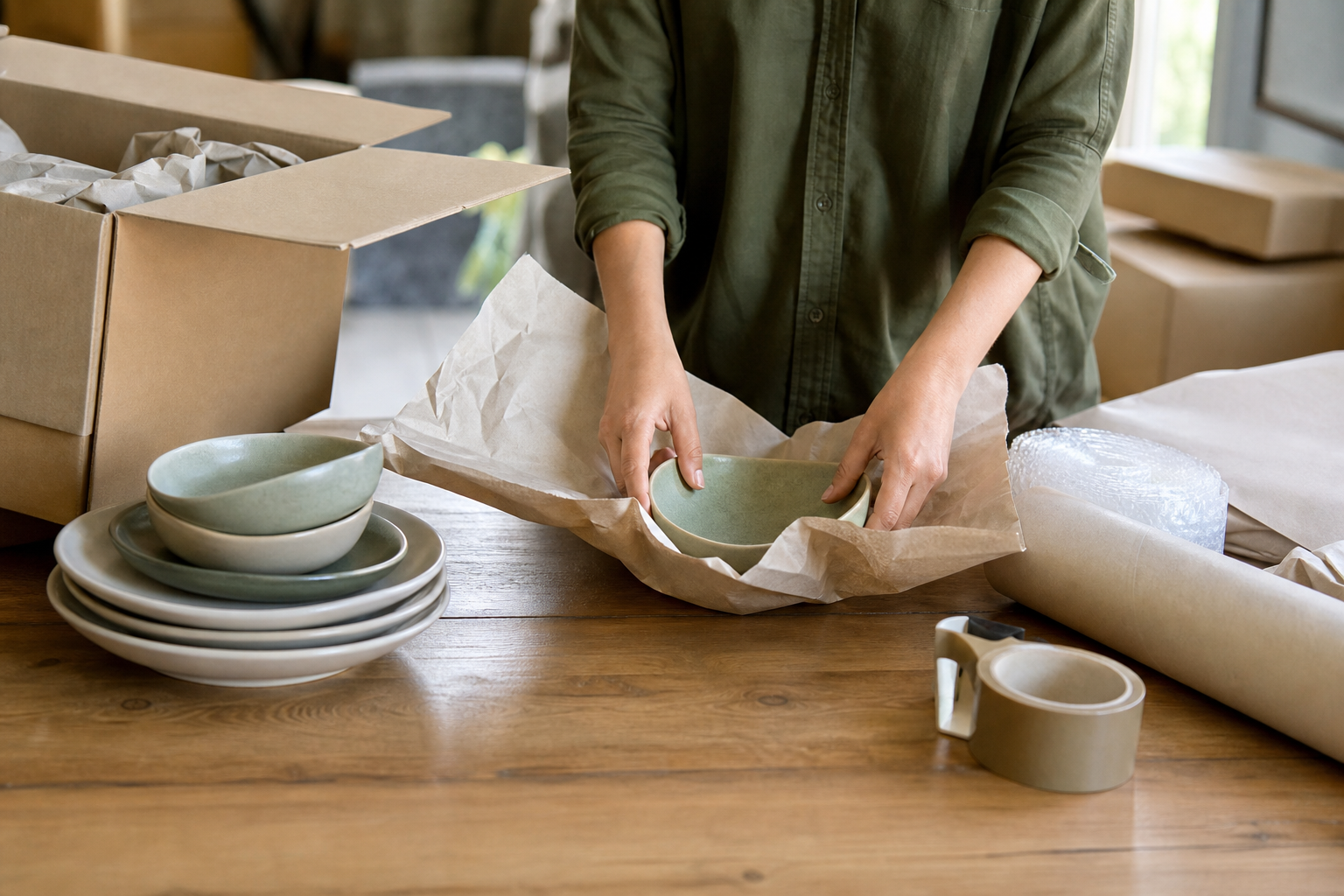
Short local moves often prioritise speed and cost over the absolute highest protection level. Sensible material choices preserve your items while keeping labour predictable.
Box type and strength
For local moves, single-wall boxes are often acceptable for nonfragile items such as books, linens, and small appliances. Use medium or small boxes for heavy items to avoid overloading. If you already have used boxes in good shape, they can be fine for a single local trip. Local movers commonly base labour on volume and fragility, so consistent, well-packed boxes speed a move and can lower handling time (5 Boxes You Need for a Home Move).
Cushioning and sealing
Packing paper is an economical workhorse for wrapping breakables and filling voids. Reserve bubble wrap for very fragile pieces or electronics you will handle yourself. Use strong packing tape and seal every box with an H pattern. Keep labels consistent and visible on at least two sides, so movers do not need to reposition boxes to read them.
When to upgrade
Upgrade to double-walled boxes, dish packs, or extra blankets when items are fragile, unusually heavy, or if you expect repeated handling even on a local move. A short trip with multiple stops or storage in between can behave like a long-distance move in terms of risk.
Best packing materials for long-distance moves
Long-distance moves require materials rated for repeated handling, vibration, and longer transit times. Moving guides recommend investing in higher-spec components for these moves to reduce risk and replacement costs (Packaging Materials for a Long-Distance Move).
Boxing and structural protection
Double-walled, heavy-duty boxes are the standard for long-distance freight. Use specialist boxes where required: dish packs for plates and glasses, mirror and picture boxes for flat glass, and wardrobe boxes for hanging garments. These specialty boxes are engineered to reduce shifting inside a truck over hundreds of kilometres.
Cushioning, padding and strapping
Combine packing paper with bubble wrap for fragile items: paper prevents surface abrasion while bubble wrap handles impact. Furniture blankets and moving pads are essential for couches, mattresses and large wooden pieces. For appliances, use appliance straps and skid plates during loading to control movement. Quality tape and reinforced sealing prevent boxes from opening during transit.
Pack like a pro
Fill boxes snugly so contents cannot shift. Label fragile boxes clearly and mark the top. For long-distance moves, consider professional packing to match materials to actual risk and to receive a reliable quote that accounts for packing labour and materials (Packaging Materials for a Long-Distance Move, How To Pack Boxes for Moving).
Specialty materials for fragile, bulky or awkward items
Some items demand purpose-built protection. Use the right material and you avoid extra labour, damage, and insurance disputes.
- Dish pack boxes: thick-walled boxes with internal dividers or inserts for plates, stemware and ceramics reduce breakage during multiple transfers.
- Mirror and picture boxes: include foam corners and hardboard panels to prevent edge damage and glass breakage.
- Wardrobe boxes: let you move hanging clothes without folding and save packing time for formal wear.
- Appliance straps and skid plates: distribute weight when moving refrigerators and washers, especially on stairs or long carries.
- Piano blankets and moving boards: built for the weight distribution and lift patterns pianos require; these items are often best handled by experienced professionals.
For fragile or high-value items, hiring professional packers reduces risk because they match materials to the object and secure items according to moving best practices. If you want combined supply and labour, review local packing services.
Sustainable and reusable packing options in Ottawa
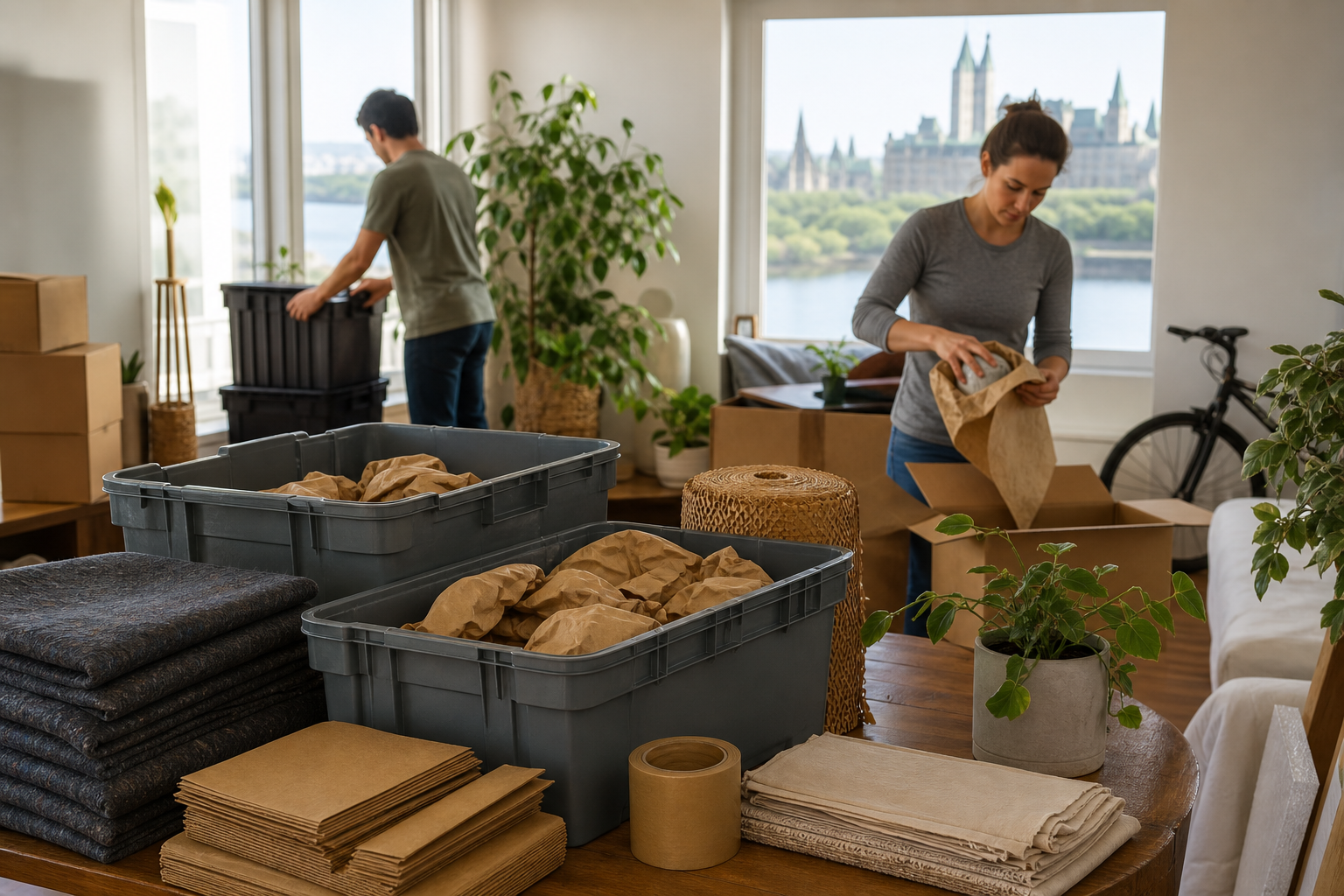
If waste matters, you have strong alternatives to disposable packing. Reusable plastic bins, box rental services, and buying secondhand boxes reduce environmental impact. Reusable options can also reduce time spent reinforcing weak boxes. Industry advice highlights paper cushioning as a lower-waste alternative to bubble wrap when correctly used (How To Pack Boxes for Moving, Essential Packing Supplies for Stress-Free Moving).
When to rent reusable bins: choose rental bins for short local moves or when you want to avoid disposal logistics. For long-distance moves, confirm the rental service will accept returns at your destination. Buying secondhand boxes from marketplaces or neighbourhood groups is cost effective for local moves, but verify box condition before using for heavy loads.
How your material choices affect moving estimates and common objections
Movers price labour and time partly by volume, complexity and fragility. Choosing poor-quality boxes or inconsistent packing increases handling time and can raise the labour component of a quote. Conversely, well-packed, standard-sized boxes speed loading and unloading and make quotes more predictable. Ottawa moving advice highlights that box quality, volume and fragility directly influence labour estimates (5 Boxes You Need for a Home Move, Packaging Materials for a Long-Distance Move).
Common objections and short responses:
- I can save money with cheap boxes, response: false economy if boxes fail and cause damage or rework; good boxes often save time and stress.
- I will pack last minute, response: rushing increases mistakes and damage risk, especially for fragile or heavy items.
- I do not need professional packing, response: professional packing is most cost effective for long-distance moves, specialty items, or when time and guaranteed handling matter.
Where to buy or rent supplies in Ottawa and next steps
Buy supplies at local hardware stores, moving-supply specialists, or online marketplaces. Rent reusable bins from box rental or moving kit services when available. If you prefer a single-supplier solution, many moving companies offer material bundles or full packing services; ordering materials through the mover can simplify the quote and ensure the crew uses the right specifications on moving day. For bundled options and a tailored estimate that includes material choices, explore Let's Start Moving packing services and schedule a video quote to match materials to volume and distance (packing services, Let's Start Moving).
Practical next steps
- Sort items by fragility and size, then list which specialty boxes or protections you will need.
- Decide buy, rent, or request-from-mover based on move distance, timing, and disposal convenience.
- Get a video quote if you want a precise materials and labour estimate without an on-site visit.
- Reserve any specialty items such as wardrobe boxes or appliance straps well in advance of move day.
Frequently asked questions
What are the best packing materials for moving house in Ottawa?
The best materials vary by move type. For local moves, a mix of single-wall boxes for light items, packing paper, furniture blankets and quality tape will usually suffice. For long-distance moves, use double-walled boxes, dish packs, mirror boxes, bubble wrap for very fragile things, and furniture blankets. For local sourcing and combined supply plus labour, review local packing services such as packing services for bundled options.
Do I need double-walled boxes for a local move or only for long-distance moves?
Double-walled boxes are not always necessary for short local moves unless the contents are heavy or fragile, or you expect multiple handling steps. Single-wall boxes are acceptable for light items. If you are unsure, consider upgrading specific boxes for heavy or valuable items to reduce the risk of collapse during short carries.
When should I hire professional packers instead of buying materials and packing myself?
Hire professionals when you have many fragile or specialty items, when your move is long-distance, or when you lack time. Professional packers match materials to risk, speed the process, and make estimates more reliable. A video quote can show whether packing services are the better option for your inventory.
Can I rent reusable bins instead of buying boxes and are they worth the cost?
Reusable bins are a good fit for short local moves or when you want to avoid disposal. They can save time and reduce waste. For long-distance moves, check whether the rental service supports return or destination pickup. Evaluate cost against time saved and disposal hassles to decide if renting is worth it.
How do packing materials affect my moving quote and potential damage risk?
Stronger materials and consistent packing reduce handling time and lower the chance of damage, which can make labour estimates more accurate. Poor packing increases handling complexity, which may raise labour time and risk. Movers commonly base labour on volume and fragility, so clear choices about materials help keep quotes predictable (5 Boxes You Need for a Home Move).
Ready to pack? Get a fast video quote or book packing services with Let's Start Moving to match materials to your move and get a clear estimate.