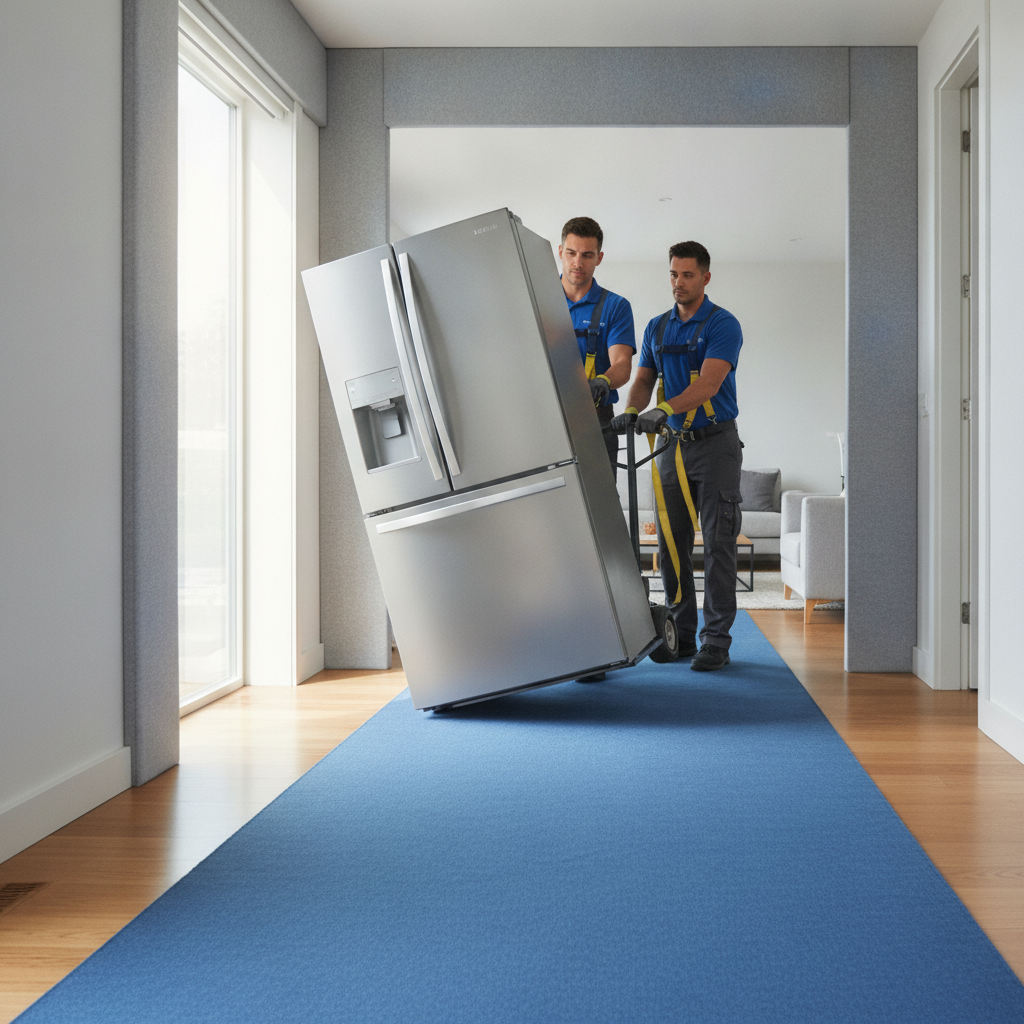
Moving a refrigerator is the controlled, upright transport of a heavy appliance after it’s emptied, defrosted, disconnected, and secured. The goal is to protect the compressor, doors, lines, and floors. The safest approach uses an appliance dolly with straps, two to three people, and a pre‑planned route with protected thresholds.
By Let's Start Moving • Last updated: 2026-07-08
Overview
This guide explains how to move a refrigerator the way professional appliance movers do it—what gear to use, exact prep, measurements, obstacles, and plug‑in timing. We share hard‑won lessons from real moves so you avoid scratched floors, jammed doorways, and a silent compressor after delivery.
If you’re choosing between “muscling it” and doing it right, choose control over effort. In our work, preventable damage happens when people skip measurements, use flat dollies, or lay the unit down without planning the recovery time.
What You Need Before You Start (Equipment Checklist)
Have an appliance dolly with straps, lifting straps, moving blankets, corner guards, floor runners, painter’s tape, stretch wrap, and basic hand tools ready. This setup keeps the unit upright, protects finishes and flooring, and reduces strain so you can move deliberately instead of forcefully.
We’ve stopped using flat four‑wheel dollies for refrigerators—period. They sit too low, drift on thresholds, and offer no back‑tilt control. An appliance dolly wins every time for tall, heavy loads.
- Appliance dolly (with straps): stabilizes tall weight and offers leverage on stairs/ramps.
- Lifting straps (team straps): to help clear bumps and share load over short lifts.
- Moving blankets + corner pads: prevent door and cabinet dings in tight turns.
- Floor runners/Ram Board: protect hardwood/tile from wheel tracks and grit.
- Tape + stretch wrap: painter’s tape for doors; stretch wrap to bind and protect surfaces.
- Hand tools: screwdriver set, Allen keys, adjustable wrench for handles and water line.
- Grip gloves + level: better control; confirm final leveling at destination.
Decision rule: If you don’t have an appliance dolly, don’t start. Borrow, rent, or pause and schedule our Appliance Moving service rather than risking the compressor or your floors.
How to Prep Your Refrigerator the Right Way (Defrost, Disconnect, Secure)
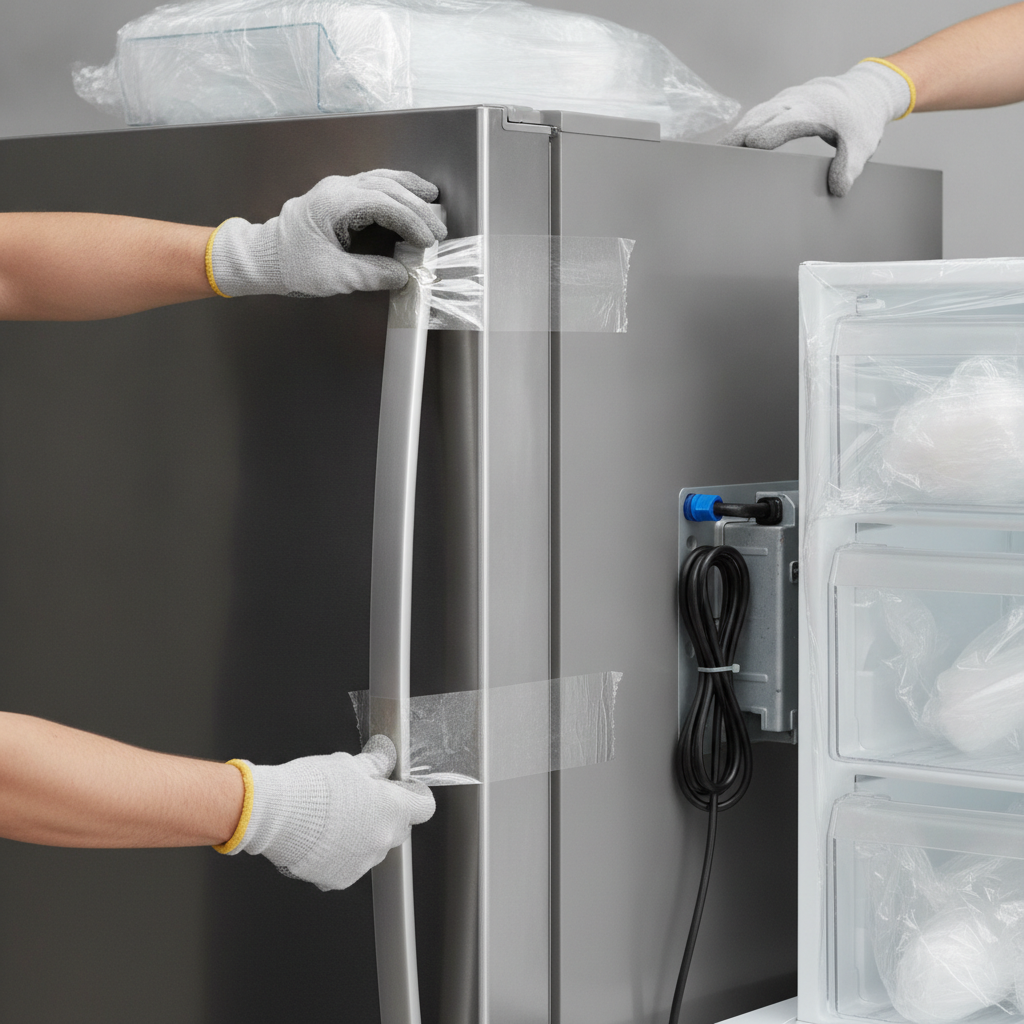
Empty completely, unplug, and defrost 2–8 hours (overnight if frost is heavy). Shut the water valve, disconnect and cap the line, remove and pack shelves, coil/tape the cord, and wrap the body with stretch wrap and blankets. Measure every doorway and turn before you move.
- Clear and defrost: Empty all food. Unplug and open doors. Towels catch meltwater. Most frost‑free units clear in 2–4 hours; thick ice can take overnight.
- Water line: Close the valve fully, then disconnect. Cap the line to prevent drips. Missed valves have soaked floors—we’ve seen it.
- Shelves and bins: Remove and wrap; box and label them. Loose glass can shatter mid‑turn.
- Secure the unit: Painter’s tape across each door at two points; stretch wrap around the body; blanket corners.
- Measure the path: Standard fridges are ~29–36 in wide and 65–70 in tall. You need at least 1 in of clearance after removing handles (often 1–2 in saved).
- Handle removal: Pop handles first, then consider door removal only if essential.
Real‑world miss: a 33‑inch fridge, a 32‑inch doorway, and no handle removal plan—result: gouged jambs and a reschedule. Ten minutes with a hex key would have prevented it.
Step-by-Step: How to Move a Refrigerator Safely
Strap the fridge to an appliance dolly, tip back to a controlled 10–15° angle, and move in short, square turns with a spotter calling directions. Never drag. On ramps or stairs, keep the high side uphill and descend one riser at a time with clear commands.
- Strap to the dolly: Center weight; run straps above and below midpoint; cinch tight without crushing doors.
- Tip and balance: Tilt 10–15° until wheels carry the load; verify doors stay shut.
- Protect the route: Lay runners; pad corners; assign a front spotter to call turns and hazards.
- Square your moves: Roll straight; stop; rotate; roll—avoid twisting under load.
- Thresholds and bumps: Lift slightly with team straps while wheels clear; keep hands off pinch points.
- Stairs: Dolly tilted back to ~45°; high side uphill; descend one riser per move with a rear braker.
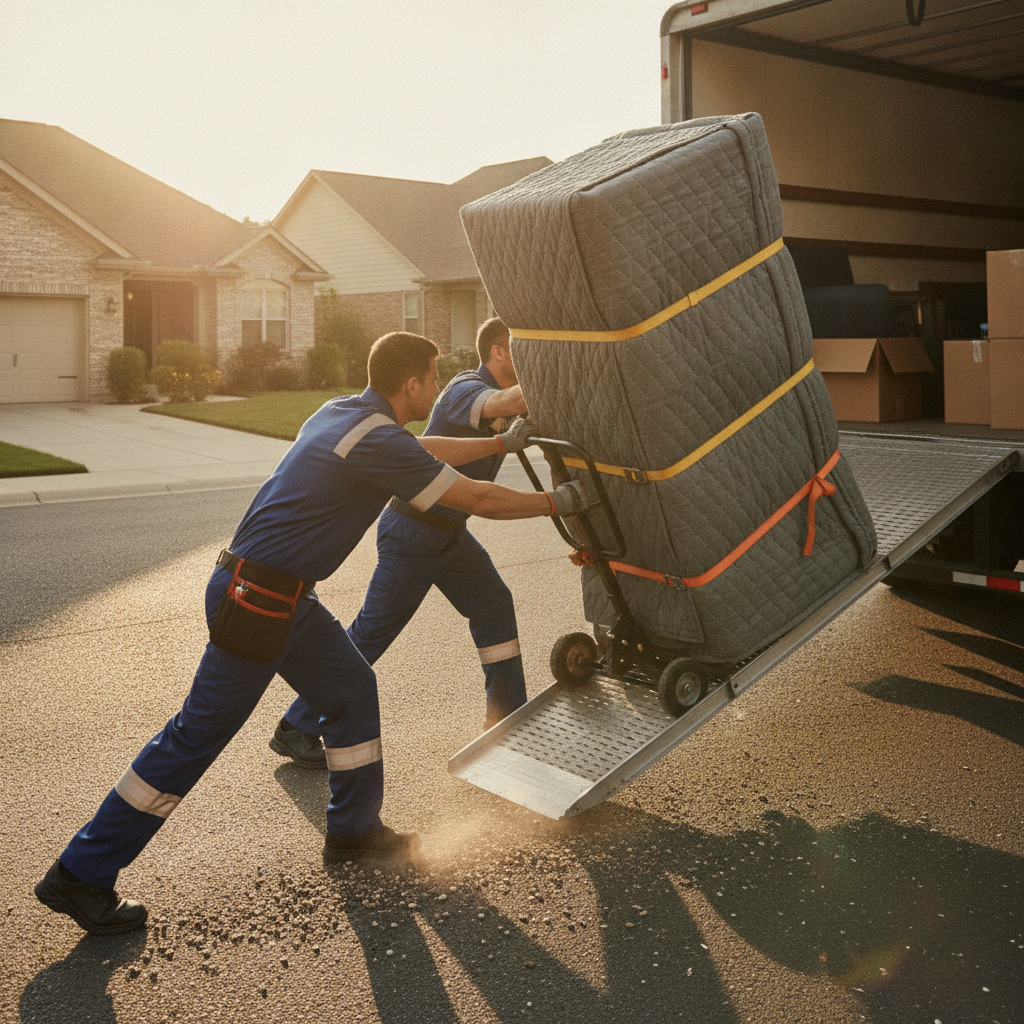
- Truck loading: Use a ramp; keep center of gravity low; in the truck, stand upright, blanket, and strap to e‑track at two heights.
The Hardest Parts — Stairs, Tight Doorways, and Heavy Models
Slow down and control the center of gravity. For stairs, use a braker and keep the high side uphill. For narrow paths, remove handles or doors and pad jambs. For 280–400 lb French‑door or built‑in models, add people and use lifting straps in addition to the dolly.
Obstacle plan and pro techniques
| Obstacle | Technique | Minimums/Notes |
|---|---|---|
| Stairs (up/down) | Dolly at ~45°; one step at a time; braker below controls speed; clear verbal calls. | Two movers + spotter; add a fourth for heavy units. |
| Tight doorway | Remove handles first; hinge off house door if needed; pad jambs; square turns only. | Target ≥1 in clearance; fridge width often drops 1–2 in without handles. |
| Long ramp | Keep momentum steady; never ride the load; keep the unit high side uphill. | Dolly with brakes preferred; strap as a safety tether. |
| Built‑ins/heavy models | Add personnel; combine lifting straps with dolly control; pre‑pad floors. | French‑door/built‑ins run ~280–400+ lb; make it a 3–4 person move. |
This is exactly where DIY attempts stall—or cause damage. Our Appliance Moving crews handle stair carries and tight turns daily as part of Residential and Commercial Moving. If your route includes more than four stairs, a landing turn, or a heavy French‑door model, call us before you start, not after something goes wrong.
After the Move: When Can You Plug It Back In?
If the fridge stayed upright, level it, reconnect water, and you can usually power it up after 30–60 minutes. If it was on its side, let it stand 2–4 hours so oil settles. Verify door seals and airflow clearances before loading food.
Our practice: upright moves get a brief stand and level check; side‑laid units wait a minimum of two hours. If a compressor sounds strained or won’t start, keep it off and call the manufacturer.
Troubleshooting: Leaks, No Cool, Door Issues
Most post‑move issues trace to water connections, leveling, or door alignment. Recheck the shutoff valve and fittings, confirm the fridge is level, and adjust door hinges so seals make full contact. Give cooling several hours before judging performance.
- Water leak at hookup: Reseat the line; inspect the ferrule; snug the fitting (hand‑tight plus a quarter‑turn).
- Not cooling yet: Compressor cycles take time. Wait 4–6 hours before deep troubleshooting.
- Doors not closing: Re‑level front feet so doors self‑close; adjust hinge if needed.
- Rattle/vibration: Check that the unit isn’t touching cabinets; add pads under feet.
We’ve seen two common “oh no” moments: a barely closed water valve that slowly soaked a baseboard, and a side‑laid fridge powered too soon that clicked but never cooled. Both are avoidable with the checks above and the waiting periods we outlined.
Advanced Tips (Optional but Helpful)
Plan like a pro: photograph the back panel before disconnects, label wires/lines, pre‑pad tight corners, and stage shelves and hardware in one labeled box. Small details prevent big setbacks on move day.
- Photo references: Snap the water valve, routing, and any brackets before removal.
- Single hardware box: Bag and label handles, screws, and shelf clips—one box only.
- Door swing check: Verify your new space’s swing clearance before placing the unit.
- Air gaps: Leave manufacturer‑recommended wall clearance to prevent hot spots.
If you’d prefer a single coordinated crew to pack, pad, move, and place the fridge in one run, our Packing Services & Supplies integrate seamlessly with full Residential or Commercial Moving.
When DIY Becomes a Bad Idea (and What Professional Appliance Movers Do Differently)
Stop DIY if you lack an appliance dolly, face more than four stairs, have a narrow turn, or your fridge weighs 250+ lb. Pros bring the gear, team size, and choreography to keep weight controlled and finishes safe, then secure the unit upright in the truck.
- Clear cutoff points: 250+ lb, more than four stairs, spiral stair, or doorway under fridge width + 1 in—book pros.
- Pro advantages: High‑capacity dollies, team straps, corner guards, wall/floor protection, e‑track tie‑downs.
- Integrated help: Our Appliance Moving is available standalone or bundled with Residential/Commercial moves.
For additional perspectives on handling appliances and broader move planning, see this appliance handling overview, a concise refrigerator prep guide, and a general move checklist.
FAQ
Quick, direct answers to the most common refrigerator moving questions—defrost time, orientation, team size, and plug‑in timing—based on field practice.
Do I have to defrost a frost‑free refrigerator before moving?
Yes. Moisture still accumulates. Plan 2–4 hours to clear most frost‑free interiors and overnight if ice is heavy. Dry the cabinet so water doesn’t drip during tilting and cause odors later.
Can a refrigerator be transported on its side?
Upright is best. If you must tilt it, keep the compressor side up. After arrival, let it stand 2–4 hours before powering on so oil drains back into the compressor.
How many people do I need to move a fridge safely?
Two strong adults and a spotter for standard units. For 280–400 lb French‑door or built‑in models, plan three to four people with an appliance dolly and lifting straps.
How long should I wait to plug in a refrigerator after moving?
If the fridge stayed upright, 30–60 minutes is usually fine. If it rode on its side, wait 2–4 hours so refrigerant oil settles, then level the unit and power on.
What if my hallway is too narrow?
Measure first. Remove refrigerator handles (often frees 1–2 inches) or hinge off the house door. Pad doorjambs. If angles are unsafe or clearance is under 1 inch, bring in appliance movers.
Key Takeaways
Use an appliance dolly, keep the fridge upright, measure every turn, and respect plug‑in wait times. If you hit more than four stairs, a tight landing, or a 250+ lb model, book trained appliance movers to avoid damage and delays.
- Appliance dolly over flat dolly—every time.
- Defrost 2–8 hours; remove shelves; tape and wrap.
- Minimum 1 inch doorway clearance after handle removal.
- Stairs: 45° tilt, one riser at a time, with a braker.
- Plug‑in waits: 30–60 min upright; 2–4 hours if side‑laid.
Additional Resources
Check your model’s user manual for specific clearance, leveling, and water line instructions. Keep the manual, hardware, and shelf clips together so reassembly is quick and accurate at destination.
- Manufacturer’s manual for leveling specs and clearances
- Model/serial label inside the fridge for parts compatibility
- A simple room sketch with doorway widths and stair counts
About the author: Let’s Start Moving is a licensed and insured moving company providing Residential and Commercial Moving, plus Appliance and Refrigerator Moving. Our trained crews combine professional packing, safe handling, and coordinated loading to reduce stress and protect your home.