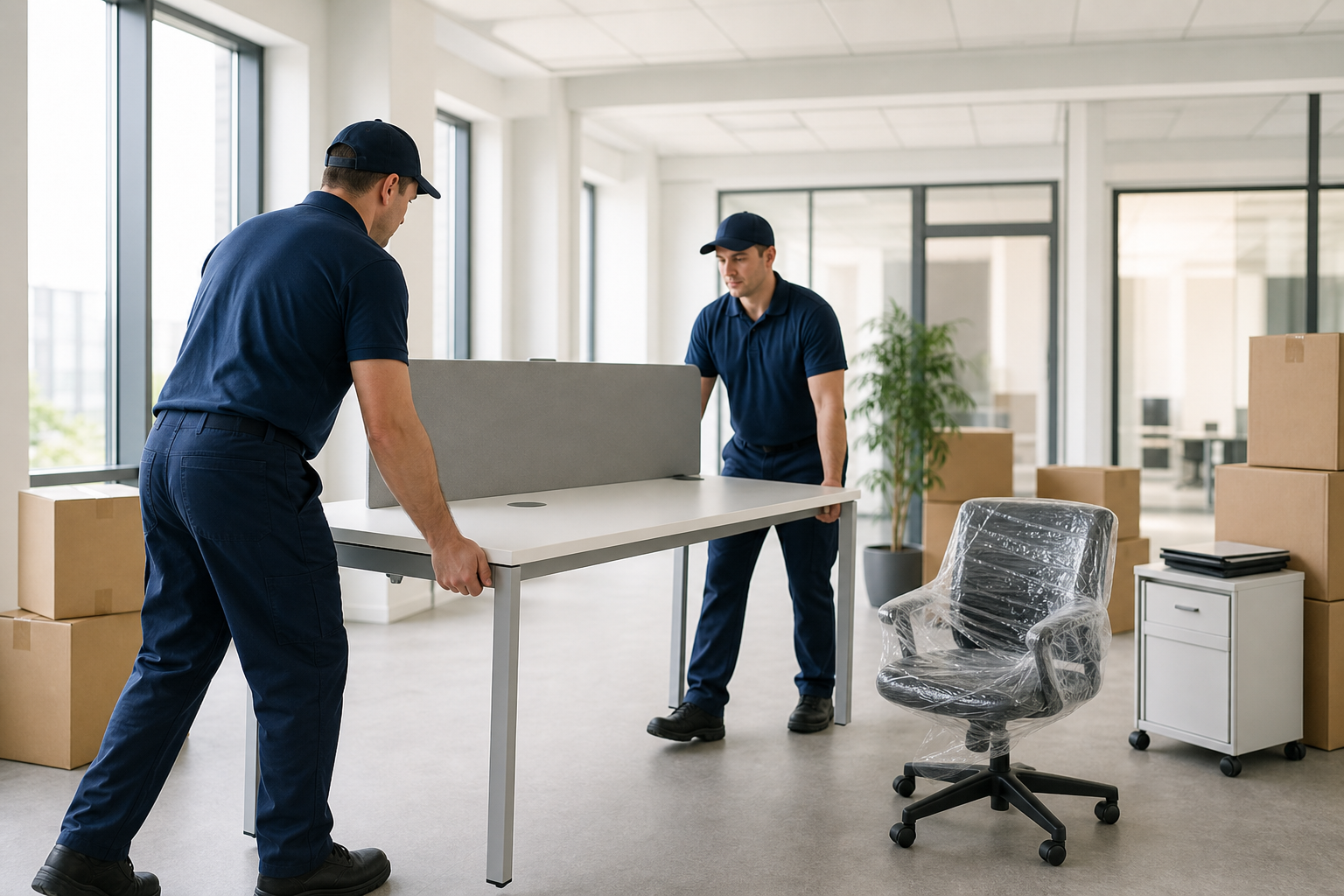
How to move office furniture safely without disrupting the workplace
Moving office furniture safely requires planning, the right tools, and clear safety limits so people and property are protected. This step-by-step workflow is written for office managers, facilities teams and small business owners in Ottawa who will run the move themselves or decide when to hire professional movers. Follow each numbered section as a checklist on moving day, and use the decision guide to pick the safest option for heavy or specialty items.
1. Plan and measure before you move
Begin by measuring every access point along the route from workspace to truck. Measure door widths and heights, elevator interior height and depth, stair widths and handrail clearances, and corridor clearances where turns are needed. Measure diagonals and turning radii for long items. Add the thickness of protective padding when checking clearances, because wrapped furniture needs extra space.
Sketch a simple map that shows the route, any pinch points and where you will place floor protection. Confirm building rules, move-in and move-out windows, elevator booking procedures and any required proof of insurance with property management. Early confirmation prevents last-minute delays and reduces the risk of damage to walls, doors and finishes.
2. Audit what to move, then prepare and disassemble
Audit each desk, cabinet and workstation and decide what to keep, donate, sell or recycle. Create a short inventory sheet and use colour-coded labels or numbered stickers so items are easy to place in the new space. Remove loose items such as office supplies, monitor arms, power strips and personal effects before you start wrapping furniture.
Disassemble modular desks, shelving and cubicles when possible. Place hardware from each unit in a labeled bag and tape it to the disassembled piece or store it in a clearly marked box. Disassembly reduces bulk and weight, lowers the chance of scratches and helps items pass through narrow doors. If you will reassemble on site, include a cordless drill and suitable fastener boxes in your moving kit.
3. Protect furniture: materials and wrapping techniques that work
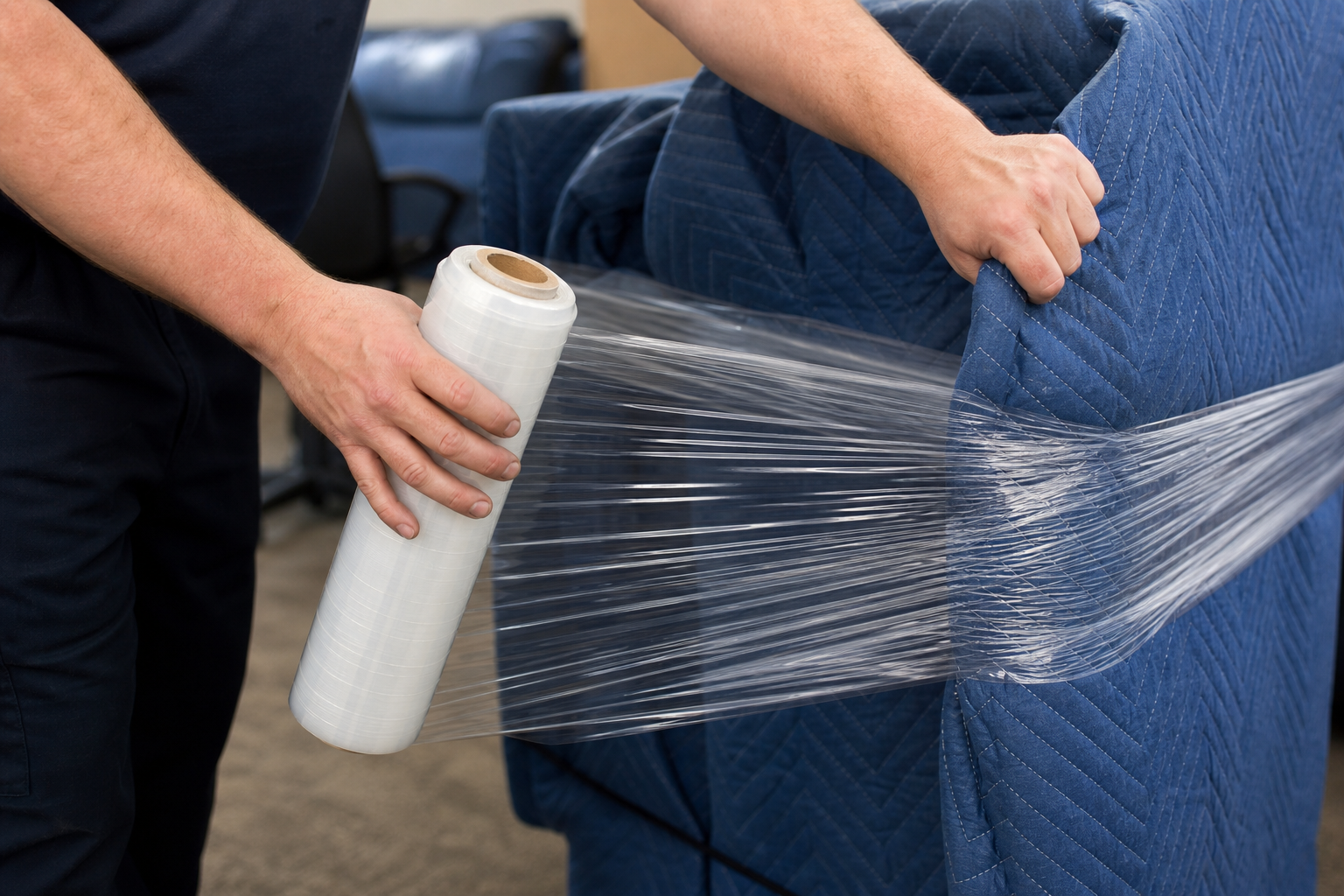
Use protective materials tailored to each surface. Moving blankets and padded covers protect wood and laminate surfaces from dents and scratches. Bubble wrap and foam sheets protect glass and delicate trim. Corner protectors guard edges during carries and in transit. Use shrink wrap to keep drawers and removable parts secure, and wrap electronics separately in padded boxes.
Packing sequence for common items
- Desks: clear the surface, remove drawers and hardware, wrap tabletops and legs separately, and label hardware bags so reassembly is fast.
- Filing cabinets: empty the drawers or lock them, move drawers separately when practical, and transport cabinets upright to avoid damage.
- Conference tables: disassemble legs when possible, protect the tabletop with thick padding, and use multiple carriers for large pieces.
- Chairs: remove casters if they interfere with transport, bag cushions when applicable, and wrap frames to protect finishes.
- Monitors and electronics: pack in padded boxes, label each item and keep smaller electronics with the office manager or in the cab for security.
When wrapping, secure materials with low-residue tape or stretch wrap to avoid surface damage. For glass or large tabletops, use two levels of protection, such as foam or cardboard directly on the glass and moving blankets on the outside.
4. Use the right equipment and safe lifting methods
Using the right equipment makes heavy lifting safer. Common tools include furniture dollies, appliance dollies, stair-climbing dollies, heavy-duty straps and moving blankets. Sliders ease long indoor moves, and plywood sheets create a stable path over soft flooring.
Train your team in basic lifting mechanics: keep the load close to your body, bend at the knees and hips, avoid twisting while carrying, and use team lifts for awkward items. Use clear verbal commands such as "lift on three" and a single designated lead to coordinate direction. If you are unsure of a safe lift, use a dolly or pause the move and reassess.
Essential tools and protective equipment
- Furniture dollies and appliance dolly
- Stair-climbing trolley for multi-level carries
- Heavy-duty ratchet straps and cam straps
- Moving blankets, corner protectors and stretch wrap
- Furniture sliders, plywood sheets and floor runners
- Work gloves, safety boots and knee pads
- Label bags and a cordless drill set for disassembly and reassembly
5. Load, secure and protect during transport
Load the vehicle to keep the centre of gravity low and stable. Place the heaviest items against the truck wall nearest the cab, and distribute weight evenly from side to side. Use load bars, blocking and tie-down straps to prevent movement during transit. Put fragile or boxed items on top of stable platforms or in protected spots away from shifting loads.
Pad contact points between items with blankets and use corner protectors where finishes meet. If your truck has a ramp, ensure it is secure and that carriers wear footwear with good traction. Perform a walkaround after loading to confirm straps are tight and doors are correctly latched.
6. Manage building logistics and Ottawa-specific constraints
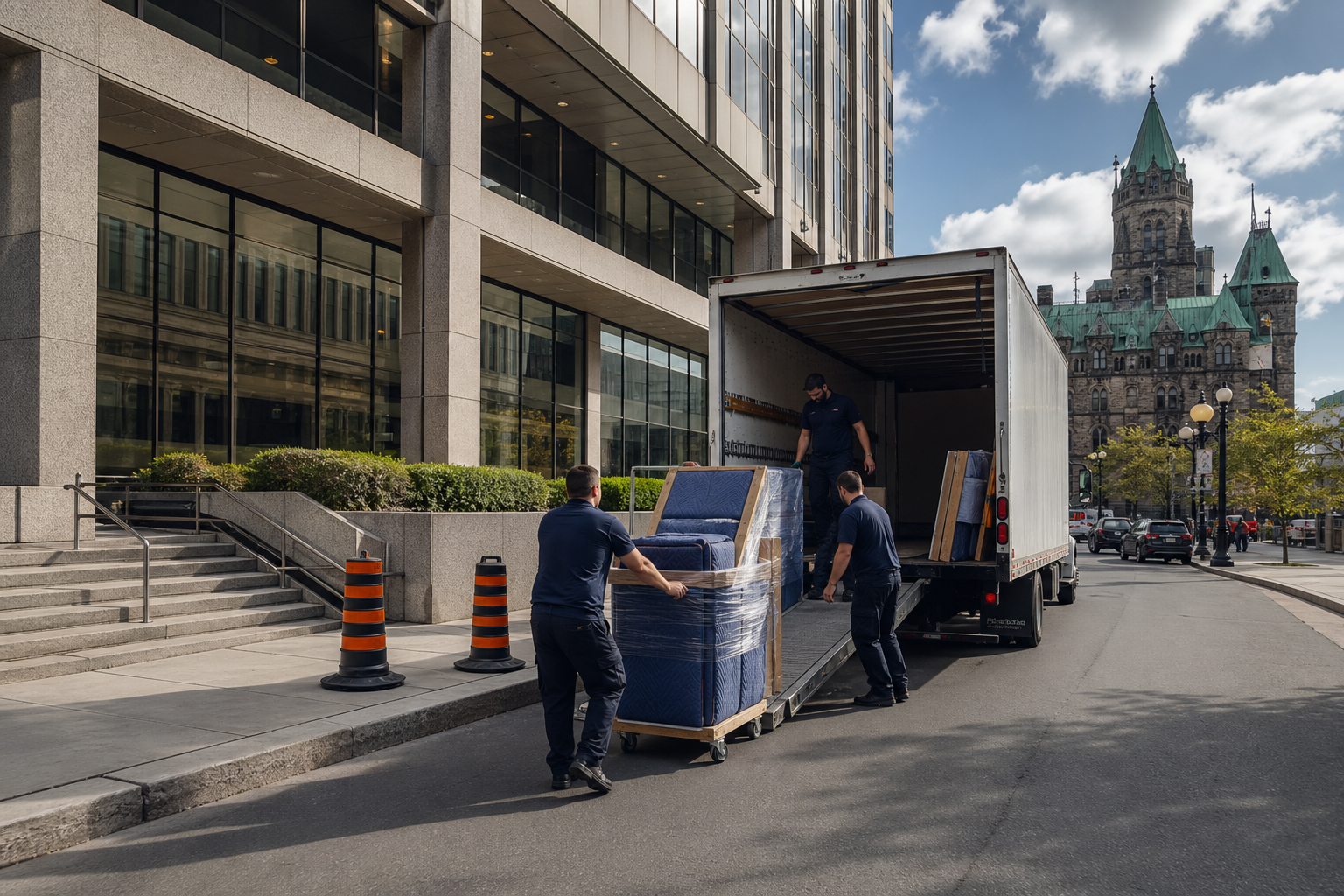
Many Ottawa properties require elevator booking, certificates of insurance and specific move windows. Book elevator pads and reserve time slots well in advance. Confirm whether move-in or move-out permits are needed for street parking or for truck loading zones. If municipal permits are required, your building manager can advise on local rules.
When stairs are unavoidable, plan for additional personnel and use stair-climbing equipment to reduce risk. Protect floors and walls with runners, plywood or temporary corner guards. If timing or space is tight, arrange secure short-term storage to stage furniture and avoid congestion during building move windows.
If you prefer professional handling, review local office moving services. For Ottawa businesses that need office moves or specialty-item handling, see the office furniture moving page on Let's Start Moving for service options and a video-quote workflow.
7. When to hire professional movers: a decision checklist and common objections
Hire professional movers when risk, complexity or time pressure make a DIY move unsafe. Typical triggers include:
- Stairs, narrow turns or elevators that limit safe passage
- Very heavy or high-value items such as pianos, safes or large server racks
- Insufficient staff or lack of proper equipment
- Short timelines where delays would cause business disruption
- Building rules that require licensed movers or proof of insurance
Common objections are cost and perceived loss of control. Compare the cost of professionals against the potential expense of damaged assets, staff injury and operational downtime. Professional movers bring equipment, team experience, insurance coverage and logistic know-how that often reduce total risk and hidden costs. For a local option with transparent quotes and insured crews, consider contacting a reputable Ottawa mover with a video-quote option.
8. Moving day checklist and short timeline you can follow
Use this run sheet as your one-page guide on moving day. Assign roles, set safety stops and confirm contact numbers for the building, drivers and any subcontractors.
- Pre-arrival: confirm elevator bookings, parking permits and the truck arrival time with building management.
- One hour before: final inventory sweep and secure all loose parts in labelled bags.
- 30 minutes before load: place floor protection and set a clear route for carries.
- Load order: heaviest fixed items first, medium furniture next, fragile items last.
- Mid-load safety stop: tighten straps, check blocking and confirm the next load sequence.
- Transit check: ensure nothing shifted in the first few minutes of travel and re-tighten straps if needed.
- Arrival and unload: protect delivery floors, place items in assigned rooms and reassemble where required.
- Final check: inspect all items for damage, confirm placement, and complete any building paperwork.
Hold a brief debrief with your team after the move to record lessons learned and update your checklist for the next move.
Frequently asked questions
How do I know if a piece of office furniture is safe to move without disassembly?
Assess joints, weight and dimensions. If an item is awkward to carry, has glass or fragile trim, or will not pass measured doorways and elevators when wrapped, disassemble it. Remove drawers and shelves to reduce weight and prevent tipping while moving.
What equipment should my team rent or buy for a single small office move?
For a small office move, rent or buy at least one furniture dolly, one appliance dolly or stair-climbing trolley, two heavy-duty straps, a set of moving blankets and corner protectors, and work gloves. Renting is cost effective for one-off moves and gives you access to professional gear without long-term storage.
How far in advance should I reserve elevators, loading docks or parking for an Ottawa office move?
Reserve elevators and loading dock time as early as possible, and at minimum two weeks before the move. Confirm building requirements for certificates of insurance and any restricted move windows so you do not incur last-minute rescheduling.
Will professional movers cover damage to office furniture and what questions should I ask about insurance?
Licensed movers usually carry basic liability insurance and may offer additional valuation or cargo coverage for high-value items. Ask movers about liability limits, what is covered under standard protection, and the steps for filing a claim. Request coverage details in writing and ask whether the mover requires a building insurance certificate.
Can I move a heavy filing cabinet or modular desk with two people or do I need a dolly or pro help?
Two people can move a small empty filing cabinet safely with correct technique, but when cabinets are full, very heavy or the carry is long or involves stairs, use a dolly or hire professional help. Dollies protect staff and floors and are the safer choice for repeated or difficult carries.
Ready to simplify your office move with licensed, insured crews and a fast video quote from a local team? Contact Let's Start Moving to discuss office moving, packing and specialty-item handling for Ottawa businesses. Ready to get started?