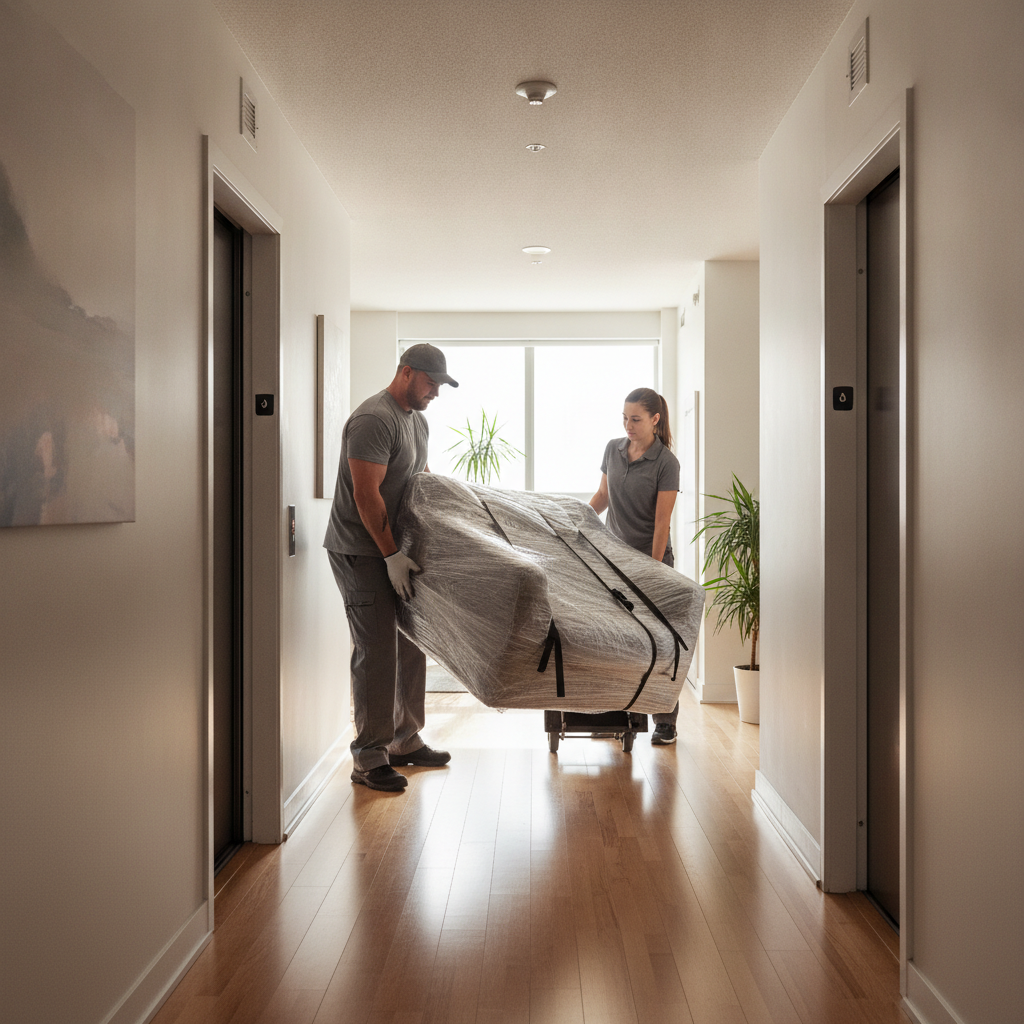
Small apartment moving tips are the practical steps that prevent damage, delays, and hallway pileups in tight spaces. In Ottawa, they center on measuring doorways, booking elevators, staging boxes vertically, and disassembling bulky furniture so move day stays fast, safe, and building-friendly.
By Ajinkya O • Last updated: 2026-07-12
| Service area | Ottawa and surrounding areas |
|---|---|
| Hours (GMB) | Open daily, 8:00 am – 11:00 pm |
| Support availability | 24/7 customer support |
| Licensed & insured | Yes |
| Specialty items | Pianos, appliances, hot tubs, treadmills, couches |
| Fast estimate | Video quote based on volume and distance |
| Average Google rating | 4.4 / 5 (7 reviews) |
Ottawa mover’s tip
Many Ottawa apartments require you to reserve a service elevator and use protective pads. Secure your time slot early and ask management about loading zones and weekend rules. Winter moves add snow and slush—lay runners and shrink‑wrap fabric furniture to avoid moisture damage.
Overview
Moving a small apartment in Ottawa is all about preparation and sequence. Measure tight spaces, book elevators, pack in smaller boxes, and load bulky items first. These small apartment moving tips reduce elevator trips, protect surfaces, and keep your building manager—and neighbors—on your side.
We’ve carried couches through narrow hallways with an audience of neighbors watching the elevator clock. The moves that go smoothly share three traits: precise measurements, disciplined packing, and a clear load order. The rest is muscle and manners.
What Makes Small Apartment Moves Uniquely Tricky
Small apartments compress the same moving tasks into tighter paths, smaller elevators, and limited staging space. The margin for error shrinks, so measuring clearances, sequencing items, and protecting walls and floors matters more. Smart prep avoids jams at the door, elevator lineups, and last‑minute disassembly.
Picture this: a loveseat wedged on a stair turn, one mover under the weight, the other trying to protect a freshly painted wall. That scene usually starts with skipped measurements. Most service elevators have door openings around 36–42 inches and cab heights near 84 inches—close enough that couch legs or a fridge handle can be the blocker.
- Clearances first: Measure doorways, stair turns, elevator depth/height. Note the tightest point and plan orientation.
- Staging zones: Create “out next” and “ready later” stacks to keep the hallway clear.
- Protection: Blankets, corner guards, sliders, and floor runners prevent dents and scuffs.
- Timing: If your building uses reservation windows, move bulky items during the first block.
Before You Pack — The 30‑Minute Apartment Audit
Walk your apartment with a tape measure and your phone timer. In 30 minutes you can document choke points, confirm elevator rules, list items needing disassembly, and set a labeling system. This quick audit prevents surprise delays and tells you when a specialty item needs pros.
Start the timer. Measure every doorway and the elevator cab. Photograph the loading zone and the path from your door to the elevator. Call your property manager to confirm elevator pads and any notice period (many buildings request 48–72 hours). Make a disassembly list for table legs, bed frames, and doors on fridges.
- Labeling: Short room codes (BR, LR, KIT) plus a number—BR‑1, BR‑2—keeps boxes findable.
- Supplies: 1.5 cu ft book boxes, 3.0 cu ft mediums, packing paper, stretch wrap, mattress bag, furniture sliders.
- First‑week kit: Toiletries, meds, basic tools, chargers, two towels, and a set of dishes.
Prefer to hand this off? Our Ottawa packing services bring boxes, paper, and two trained packers who can prep a one‑bedroom the day before move‑out.
Step‑by‑Step: Small Apartment Move Plan
Follow a short, repeatable plan: measure, book, declutter, pack tight, stage zones, then move bulky items first. This keeps hallways clear, uses your elevator window efficiently, and lowers the risk of damage in tight spaces.
- Measure the path: Capture the tightest doorway, stair, and elevator dimensions.
- Book access: Reserve the service elevator and loading area; request pads and door stoppers.
- Declutter fast: Recycle or donate anything you won’t use in 60 days.
- Pack small and dense: Stick to 1.5–3.0 cu ft boxes and cap weight near 40 lb per box.
- Stage by the door: Build “next out” stacks; keep common areas open.
- Bulky items first: Couches, appliances, treadmills—send these while your team is fresh.
- Room‑by‑room finish: Move labeled boxes in order of use. Our small item moving service accelerates this phase.
Small Apartment Moving Tips: Room‑by‑Room Packing Order
Pack least‑used rooms first and essential areas last. Prioritize a labeled “first‑week box” per person and a clear path through the living room. Smaller boxes stack better in elevators and protect your back on stairs.
In our experience, a studio packs best in this order because it creates instant breathing room for staging.
- Storage/closets: Empty first to open floor space for stacks and furniture turns.
- Bedrooms: Pack off‑season clothes and decor; leave a simple sleep kit for the last night.
- Living room: Wrap frames and lamps; pre‑disassemble the coffee table. For oversized pieces, lean on home furniture moving.
- Kitchen: Use cell boxes for glasses; pack plates vertically like records; tape knives in cardboard sleeves.
- Bathroom: Build a “first‑week” tote. Our professional packers keep essentials accessible.
Moving Bulky Items From a Small Apartment (Couches, Appliances, Treadmills)
Large items are where DIY often fails. Protect floors and walls, remove doors or legs when needed, and use proper tools: shoulder straps, sliders, dollies, and blankets. For refrigerators, treadmills, and pianos, a trained, insured crew prevents injuries and property damage.
We’ve seen a treadmill jam an elevator door because the deck wasn’t strapped. We’ve also carried a refrigerator upright with an appliance dolly only to find the elevator ceiling one inch too low—measure height, not just width.
- Couches: Measure the diagonal and remove legs. Stand the couch on end through tight doorways with corner pads. Our couch moving team does this daily.
- Refrigerators: Empty, defrost, secure doors with wrap, and use an appliance dolly. Check elevator height. See our refrigerator movers guide.
- Treadmills: Fold and strap. If non‑folding, separate deck and console; label wiring; protect the console screen.
- Pianos: Use a piano board, blankets, and a multi‑person team with insurance—our piano movers handle this with the right gear.
- Washers/Dryers: Disconnect safely; secure hoses and drum; tape power cords to the unit. For complex appliances, explore appliance moving support.
Elevator, Stairwell, and Narrow‑Hallway Tactics Ottawa Renters Need
Reserve the elevator early, pad the cab, and stage items so every trip is full but safe. On stairs, use smaller, dense boxes, keep one hand free for the rail, and communicate each turn. Protect floors and doorframes with blankets and corner guards.
One winter morning in Ottawa, we got a 90‑minute elevator slot. We sent the sofa, mattress, and the fridge in the first three trips, then stacked medium boxes floor‑to‑ceiling on the dolly for the last runs. Runners at the entrance kept slush off hardwoods.
- Book early: Confirm the service elevator and protective pads; ask about weekend rules and notice periods.
- Load order: Large items, then heavy boxes, then light/odd shapes. Aim for full yet stable loads.
- Hallway etiquette: Keep traffic flowing—don’t block exits or neighbor doors.
- Winter ready: Lay runners and shrink‑wrap fabrics to avoid moisture damage.
Local considerations for Ottawa
- Ask building management about elevator booking windows and whether a staff escort is required.
- Plan winter moves around daylight and road conditions; protect floors at entrances and inside the elevator.
- Confirm loading area access and any weekend or holiday restrictions for residential buildings in Ottawa.
When to Call a Pro vs. DIY — Honest Verdict
DIY works for a bachelor or one‑bedroom with light furniture, two strong helpers, and a cargo van. The moment a piano, a heavy fridge, or a tight elevator is involved, hire licensed, insured movers. Pros bring gear, building compliance, and damage protection DIY can’t match.
| Scenario | DIY Move | Pro Movers |
|---|---|---|
| Scope & size | Few small boxes; minimal furniture | Studios/1‑bedrooms with full sets |
| Risk of damage | Higher without pads/straps | Lower with protection and training |
| Time investment | Variable; more trips | Efficient elevator use; fewer trips |
| Building compliance | Easy to miss requirements | Handled by experienced crews |
| Bulky items | Often unsafe or blocked | Specialized equipment and methods |
| Insurance | Personal risk/exclusions | Licensed and insured coverage |
Want professional help without losing control of packing? Our team can handle just the heavy pieces—couches, fridges, treadmills—while you move labeled boxes. Start with a fast video quote.
What Ottawa customers say
“The movers were very professional, efficient, and careful with my belongings… made the entire moving process smooth and stress‑free.” — Tanvi T.
“They had a solution for every hiccup we encountered and never panicked… I highly recommend this company.” — Navneet K.
Average Google rating: 4.4/5 across recent Ottawa reviews.
Free video quote: Show us your space in minutes and get a fast, accurate estimate tailored to a small apartment move in Ottawa.
FAQ
What size boxes are best for a small apartment?
Use 1.5 cu ft boxes for books and kitchenware, and 3.0 cu ft boxes for linens and decor. Smaller boxes stack better in elevators and reduce strain on stairs.
Should I move the couch or boxes first?
Send bulky items—couches, mattresses, appliances—first while the elevator is reserved and your team is fresh. Follow with heavy boxes, then lighter or odd‑shaped items.
How far in advance should I reserve the elevator?
Call your property manager at least several days ahead; many Ottawa buildings request 48–72 hours’ notice. Reconfirm the day before and ask about pads and loading zone access.
How heavy should a moving box be?
Aim to keep each box near 40 lb so it’s safe to carry on stairs and through tight turns. Use more small boxes rather than overloading one large carton.
Key takeaways
- Measure first and plan around the tightest clearance.
- Pack smaller, denser boxes and label by room.
- Book the elevator and protect surfaces to prevent damage.
- Handle bulky items early—or hire licensed, insured pros.
Author: Ajinkya O — Contributor at Let’s Start Moving. Focuses on small‑space logistics and apartment moves in Ottawa, drawing on field input from our trained, licensed, and insured crews.