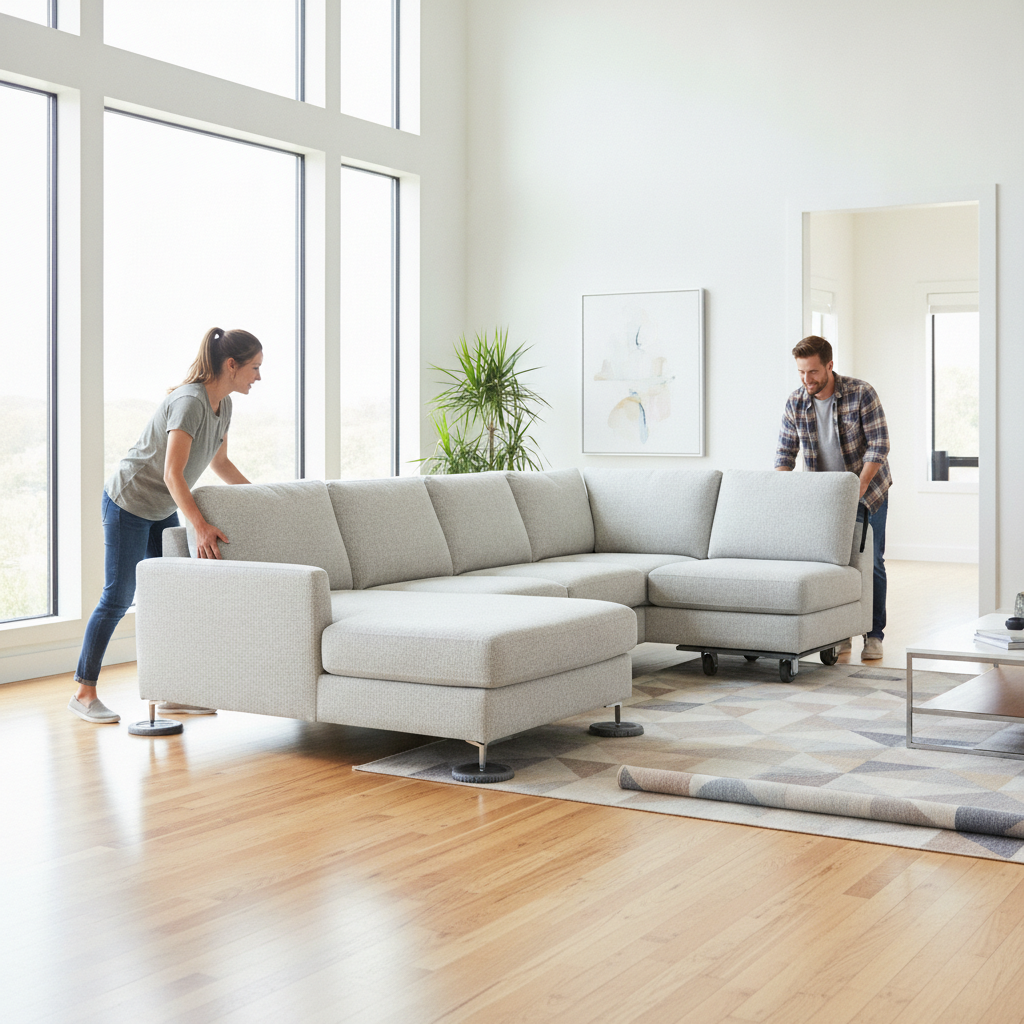
Moving heavy furniture safely is the process of planning your path, using purpose-built tools (sliders, dollies, lifting straps), protecting floors and fingers, and lifting with your legs—not your back. Clear obstacles, measure doorways, and recruit a helper. If an item exceeds your limits, hire trained, licensed, and insured pros.
By Let’s Start Moving · Last updated: 2026-07-07
Introduction
Heavy furniture moves safely when you respect physics, prepare the route, and use the right gear. This guide combines pro techniques and homeowner-friendly steps so you can protect your body, your floors, and your belongings—while knowing exactly when to call in licensed, insured movers for specialty or high‑risk items.
We move furniture every day—so we know where DIY goes right and where it goes wrong. In this how-to, you’ll learn the pro workflow we teach our crews for bulky items like couches, dressers, refrigerators, treadmills, and pianos. You’ll also get printable checklists, tool tips, and troubleshooting tactics.
- Plan-first approach that prevents last‑minute surprises
- Step-by-step moves for stairs, tight turns, and elevators
- Tool picks that reduce strain and protect surfaces
- When to switch from DIY to professional movers
Here’s the thing: muscle alone isn’t a plan. A clear path, leverage, and mechanical advantage are what keep you safe and in control.
Quick Summary
To move heavy furniture without injury: measure everything, clear a path, pad corners, use sliders or a dolly, keep the load close, and communicate with your helper. For stairs or awkward loads, strap to a hand truck. If the path is unsafe or the item is specialty, bring in pros.
- Essentials: Sliders, hand truck, moving straps, blankets, tape, gloves.
- Prep: Measure doors/hallways; remove doors if needed; protect floors.
- Lift: Bend at hips/knees; keep spine neutral; move in small steps.
- Transport: Roll on wheels whenever possible; avoid twisting.
- Escalation rule: If it’s top-heavy, fragile, or over your safe capacity, don’t force it—hire specialists.
Before You Start (Prerequisites)
Successful heavy moves start with measurement, path planning, and surface protection. Gather sliders, a dolly, lifting straps, blankets, and tape. Empty drawers, remove legs where possible, and photograph the current setup. Confirm you have at least one capable helper for items over a safe single-lifter load.
Preparation cuts risk more than any other step. We encourage homeowners to treat this like a mini project: map the route, stage your tools, and set a realistic limit for what you’ll lift.
Measure and map the route
- Measure item + path: Height, width, depth of the piece; widths and clearances for doors, hallways, turns, and stairs.
- Account for angles: A diagonal turn can add effective clearance; sketch tricky turns so your helper understands the plan.
- Remove obstacles: Rugs, mats, decor, doors on hinges (if needed), and low-hanging fixtures.
Protect people and property
- Flooring: Use cardboard runners or ram board on hardwood and tile; lay doormats at entries.
- Furniture: Wrap corners with moving blankets; tape blankets in place with painter’s tape.
- Personal PPE: Work gloves with grip, closed-toe shoes, and optional back support belt.
Stage your tools
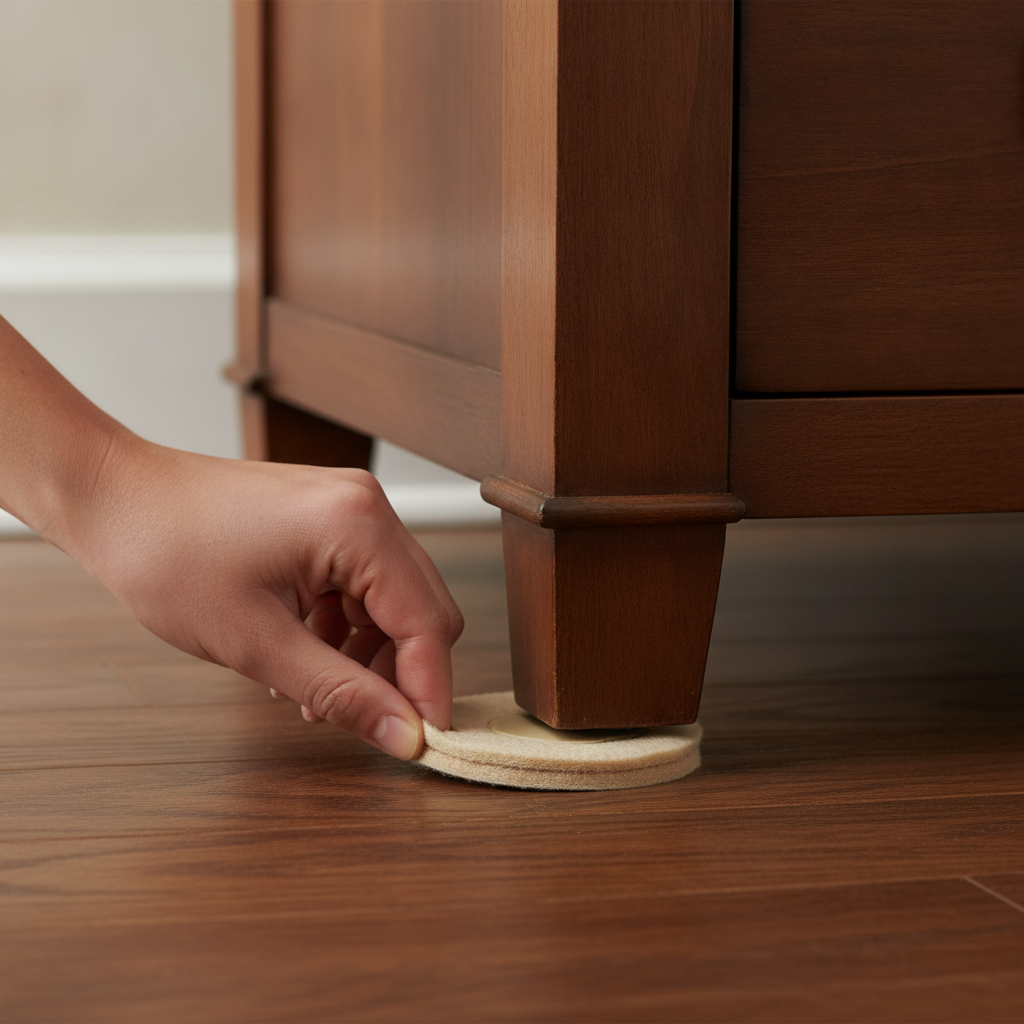
- Sliders: Hard plastic for carpet; felt-backed for hard floors.
- Dollies: Appliance hand truck with straps for tall or top‑heavy loads; four‑wheel flat dolly for low, wide pieces.
- Straps: Forearm or shoulder harness to share load and keep posture neutral.
- Extras: Tape, zip ties, stretch wrap, basic tools (hex key, screwdriver), and door jamb protectors.
Quick gauge: many full-size sofas weigh in the triple digits. A loaded dresser can exceed what one person should safely lift. Respect your limits—mechanical advantage beats brute force.
Step-by-Step: How to Move Heavy Furniture Safely
Use a repeatable sequence: lighten the load, create handholds, protect surfaces, and roll whenever possible. Secure tall items to an appliance dolly, tilt with control, and communicate before every move. For stairs, lead with the dolly and spot the base. Stop immediately if you lose balance.
Step 1 — Lighten and disassemble
- Empty drawers, shelves, and storage compartments; remove cushions from sofas.
- Detach legs, feet, or banister‑snagging pieces; label hardware in a bag.
- Unplug and defrost appliances; secure cords with tape or wrap.
Step 2 — Add protection and handholds
- Wrap the piece with blankets; tape or stretch‑wrap to keep padding secure.
- Create grip points with the wrap; keep hands away from pinch zones.
- Use corner protectors for narrow doorways and elevator entries.
Step 3 — Slide before you lift
- Tip one side slightly and place sliders under each corner.
- Push low and slow with your legs; steer from the center of mass.
- Transition to a flat dolly for long, straight routes on level floors.
Step 4 — Use an appliance dolly for tall or heavy items
- Center the load on the hand truck; secure with ratchet straps.
- Tip the dolly back using your bodyweight, not your back; keep elbows close.
- Test a short roll before committing to the full path.
Step 5 — Navigate doorways and tight turns
- Lead with the slimmer side; go diagonal if needed to gain clearance.
- Protect jambs with pads; communicate “stop” or “rotate” before turning.
- Remove doors temporarily if they steal critical inches.
Step 6 — Safely handle stairs
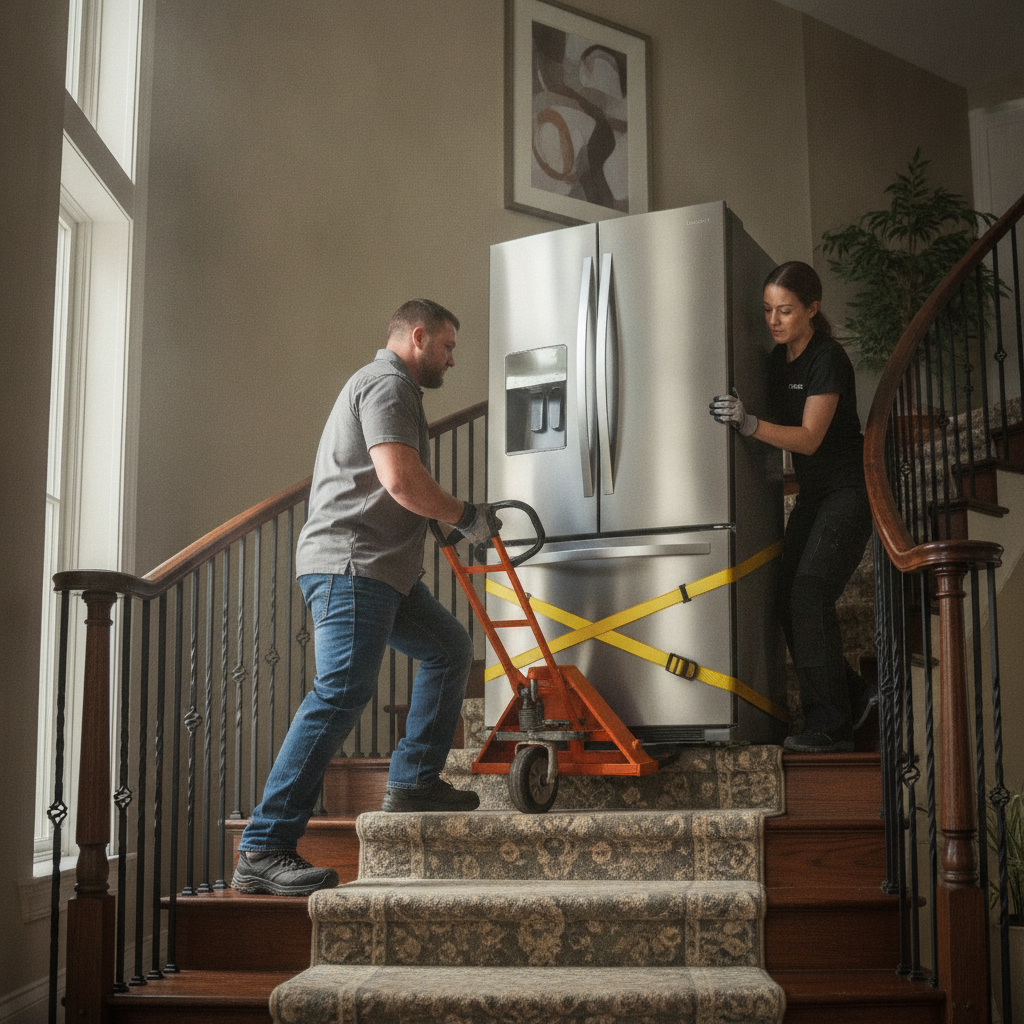
- Strap the load to an appliance dolly; the stronger lifter should spot the base.
- Climb one step at a time; rest at landings; keep the dolly wheels engaged when possible.
- Never rush. If balance slips, set down and reset the angle.
Step 7 — Load into the vehicle
- Use a loading ramp when available; walk the dolly up with short, controlled steps.
- Place heaviest items against the bulkhead; strap horizontally and vertically.
- Wedge with soft goods to prevent shifting during transit.
Step 8 — Unload and reassemble
- Reverse the route plan; stage pieces in their destination room before final placement.
- Reattach legs and components; level with shims where needed.
- Remove wrap last to avoid scuffs while maneuvering.
For top‑heavy pieces (bookcases, armoires, refrigerators), always assume they can tip. Keep the center of mass over the dolly axle and reduce vertical jolts.
Ergonomics and Safety Basics
Protect your back by keeping a neutral spine, hinging at the hips, and letting your legs do the work. Keep loads close to your body and avoid twisting under weight. Use team lifts and set the pace with clear commands like “Up—two—three.” Stop at the first sign of strain.
- Neutral spine: Imagine a broomstick contacting head, mid‑back, and tailbone; keep that alignment.
- Hip hinge: Bend at hips and knees; avoid rounding the lower back.
- Keep it close: Every inch from your center multiplies torque on your spine.
- No twisting: Pivot with your feet; never rotate your torso while loaded.
- Clear cadence: Use simple, predictable commands before each move.
Here’s what most people don’t realize: sliding and rolling loads dramatically cut compressive forces on your spine compared to raw lifting. Mechanical advantage is a safety tool—not a shortcut.
Tool and Supply Checklist (With Pro Picks)
The right tools do the heavy lifting for you. Prioritize an appliance dolly with straps, furniture sliders for your floor type, moving blankets, lifting straps, and protective runners. Add a toolkit for quick disassembly and painter’s tape to secure pads without residue.
| Tool | Best Use | Why It Helps |
|---|---|---|
| Appliance dolly (with straps) | Fridges, washers, tall bookcases | Stabilizes top‑heavy loads; reduces spinal load by transferring weight to wheels. |
| Four‑wheel flat dolly | Dressers, buffets, wide boxes | Smooth rolling on level surfaces; easy 360° maneuvering. |
| Furniture sliders | Sofas, armoires, beds | Glide over carpet or hard floors without scratches. |
| Lifting straps (forearm/shoulder) | Team carries of bulky items | Distributes load and promotes upright posture. |
| Moving blankets + stretch wrap | Any hard surface furniture | Prevents dings and abrasions; creates handholds. |
| Door jamb and floor protectors | Tight doors, delicate floors | Protects finishes where contact is most likely. |
Take a minute to stage these by the door you’ll use. A one‑minute setup can prevent a thirty‑minute problem later.
When to Call Licensed, Insured Professionals
Bring in trained movers when an item is top‑heavy, unusually valuable, or the path includes steep stairs, tight switchbacks, or long carries. Professional crews provide specialized equipment, coordinated teamwork, and liability coverage that protect you and your property.
- Specialty items: Pianos, hot tubs, treadmills, refrigerators, glass cabinets, pool tables.
- Risky paths: Spiral staircases, narrow basements, tight elevator thresholds.
- Time-sensitive moves: Coordinated elevator windows or building rules.
- Coverage: Licensed and insured crews add accountability and peace of mind.
For context on complex loads, see this overview on moving gym equipment safely. Likewise, handling a piano is a unique challenge; explore piano moving challenges for an idea of the planning required. If your move crosses from “awkward” into “unsafe,” get a coordinated team.
Common Scenarios and Pro Examples
Every home presents a few repeat puzzles: the couch through a narrow turn, the dresser up or down stairs, and the refrigerator across delicate floors. Use sliders and blankets for the first two, and an appliance dolly with straps and runners for the last. Communicate at each pinch point.
Sofa through a tight turn
- “Stand” the sofa on end (if frame allows) to reduce width; protect both ends.
- Rotate in the turn while one person spots the ceiling and corners.
- Use felt sliders on hardwood; keep the center tight to the inside of the turn.
Dresser on stairs
- Remove drawers; strap the case to an appliance dolly.
- One step at a time, calling cadence; rest at landings to reset grip.
- Keep the weight over the dolly axle; avoid sudden tilts.
Refrigerator across hardwood
- Unplug, empty, and secure doors with wrap; use door protectors.
- Strap to an appliance dolly; lay down runners to protect floors.
- Roll slowly; never twist the dolly under load when turning.
These examples mirror how our crews handle daily challenges. The pattern is consistent: protect, control, communicate.
Troubleshooting
If the load feels unstable, stop and reset: add straps, change angles, or reduce weight. When an item won’t clear a doorway, remove the door and hardware or change the orientation. If a dolly skids on stairs, reassess team positions and pace—don’t fight gravity.
- Load is tipping: Lower to the ground; shorten the lever arm; switch to a taller dolly.
- Won’t clear the door: Remove feet/legs; go diagonal; temporarily remove the door.
- Scuff risk: Add an extra blanket layer and painter’s tape at corners.
- Hand fatigue: Use lifting straps; rotate roles to rest grip strength.
- Stair stall: Take a break at the landing; restart with fresh cadence.
Remember, the right solution is usually a calmer, more controlled one—not more force.
Advanced Tips (Optional but Helpful)
Pros reduce friction, shorten lever arms, and use geometry to win. Think diagonals for tight turns, ramps to bypass big lifts, and double‑strapping tall loads. Where floors permit, combine sliders and a dolly to control direction while keeping effort low.
- Diagonal math: Tilting a dresser to its narrowest dimension can buy crucial inches in a hallway.
- Two‑dolly method: For very wide pieces, use two flat dollies positioned to balance weight, then strap together.
- Ramp logic: A short ramp can replace a lift and save your back.
- Pre‑tape paths: Mark stopping points and turns with painter’s tape to cue helpers.
- “No deadlift” rule: If you can slide or roll, do it—reserve raw lifts for unavoidable moments.
Small optimizations compound. Five smart choices can turn a hard hour into a calm 20‑minute move.
DIY vs. Pro: A Simple Decision Framework
DIY works when the item is manageable, the path is clear, and you have the right tools and help. Choose pros when the item is specialty, the route is risky, or timing matters. A quick video walk‑through with a moving company clarifies scope and safety in minutes.
| Situation | DIY is Reasonable | Hire Pros |
|---|---|---|
| Standard sofa, clear first floor path | Yes — sliders and two helpers | Not required |
| Dresser to second floor via narrow stairs | Maybe — appliance dolly + straps | Yes if turns are tight or steep |
| Refrigerator to truck via ramp | Yes — appliance dolly + runners | Yes if steep or icy approaches |
| Piano or hot tub | No | Always — specialty crew |
| Elevator time window and building rules | Maybe | Yes — coordinated pro team |
Not sure? This short guide on choosing a trusted moving company outlines what to ask before you decide.
Frequently Asked Questions
Use sliders for level floors and a hand truck with straps for tall items. Keep loads close, avoid twisting, and communicate with your helper. If the route or item feels unsafe, pause and reassess—or hire specialists who bring the gear, crew coordination, and coverage you need.
What is the safest way to lift a heavy dresser?
Hinge at the hips and knees, keep a neutral spine, and lift with your legs while keeping the dresser close to your body. Better yet, strap the dresser to an appliance dolly and roll the weight instead of carrying it. Avoid twisting; pivot with your feet.
Should I use sliders or a dolly for a couch?
Use sliders on level floors to reposition the couch and protect surfaces. For longer distances or tight hallways, switch to a four‑wheel flat dolly for better control. If you need to change floors or handle stairs, use an appliance dolly where possible and pad doorways.
How do I move a refrigerator without damaging the floor?
Lay runners or cardboard to create a protected path. Strap the fridge to an appliance dolly so the wheels take the load, and roll slowly with small, controlled turns. Keep the unit upright and avoid twisting the dolly when changing direction.
When should I avoid DIY and hire movers instead?
If the item is specialty (piano, hot tub), path is risky (spiral stairs, tight turns), or timing is strict (elevator windows), hire licensed, insured movers. Also bring in pros if you lack proper tools, enough helpers, or the move feels outside your comfort zone.
Do lifting straps really help reduce back strain?
Yes. Lifting straps shift the load to stronger muscle groups, promote upright posture, and reduce grip fatigue. They don’t replace technique, though—keep the load close, avoid twisting, and communicate clearly with your partner.
Key Takeaways
Measure paths, protect surfaces, and let tools do the work. Slide before you lift, strap tall loads, and move in short, controlled steps. For specialty items or risky paths, hire licensed and insured movers who bring the right equipment, teamwork, and coverage.
- Plan and protect first; muscle comes last.
- Sliders and dollies cut strain and prevent damage.
- Communication and cadence keep teams synchronized.
- Use a simple DIY‑vs‑pro framework to stay safe.
Additional Resources
Build your skills with practical checklists and decision guides. Study how pros plan specialty moves, learn what to ask before hiring a mover, and practice safe lifting mechanics. The more you prepare on paper, the smoother your move will go on the day.
- Overview of moving commercial gym equipment to understand complex, heavy loads
- Questions to vet a mover: choose a trusted moving company
- Specialty challenges: safely moving a piano
Conclusion
The safest way to move heavy furniture is to plan the path, pad the piece, and use sliders, dollies, and straps to do the lifting for you. Move deliberately, communicate, and stop if anything feels unstable. For specialty items or risky routes, bring in a licensed, insured crew.
You’ve now got a repeatable framework for any bulky item: prep, protect, position, and proceed with control. When the job calls for specialty handling—from treadmills to pianos—our team can manage packing, transport, and careful placement so you don’t have to.